Getting Veneers in Mexico: What to Know Before You Go
May 9, 2026

Back to Blog
.png)
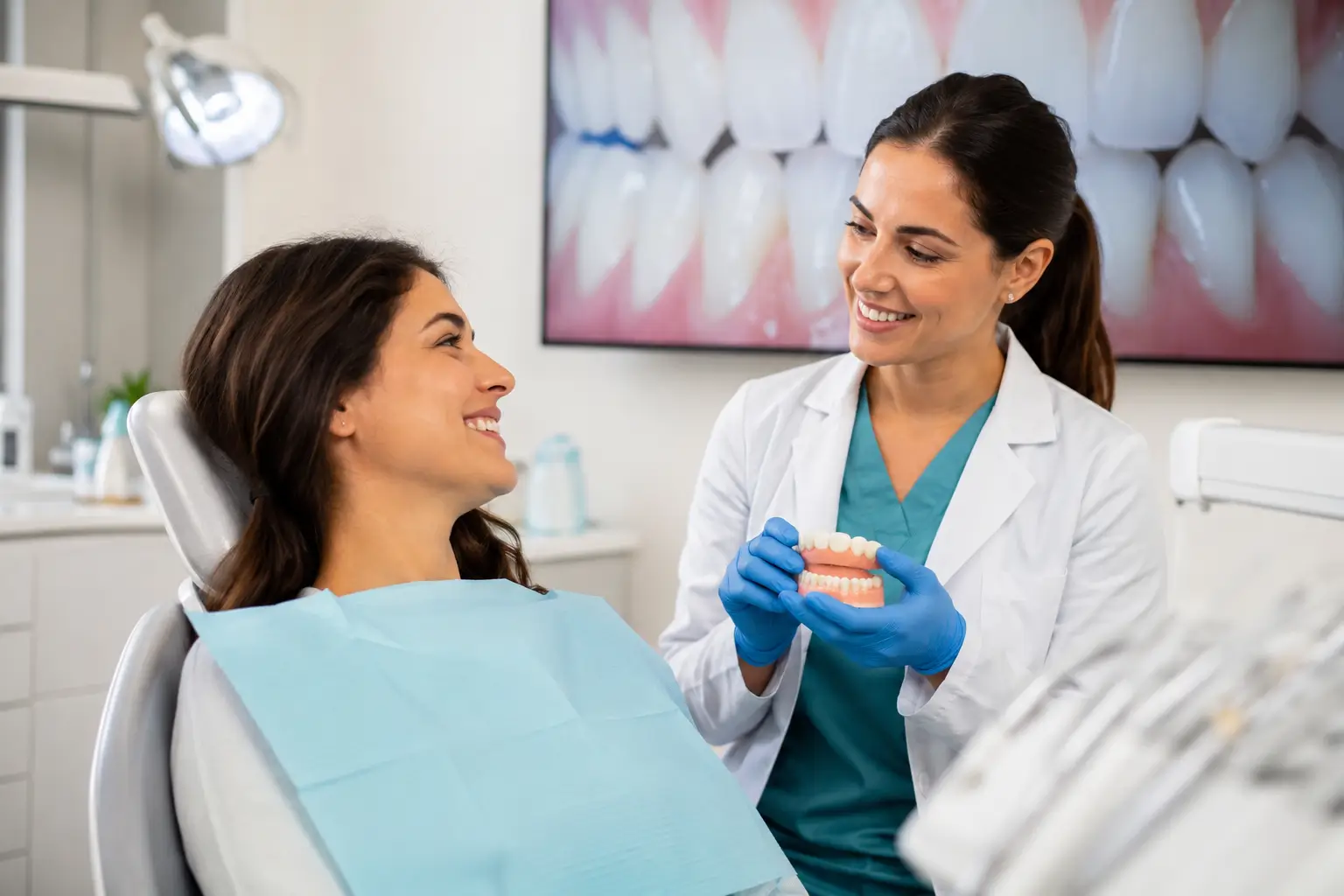
If you've gotten a quote for porcelain veneers in the United States, you probably experienced a bit of sticker shock. A full smile makeover can easily reach five figures, and dental insurance rarely covers cosmetic dental procedures. So it makes sense that more people are looking south of the border, where dental clinics in cities like Los Algodones, Tijuana, Cancún, Playa del Carmen, and Puerto Vallarta treat international patients every day—at a fraction of USA prices.
But here's the thing: a "good deal" stays good only when the savings are real and the quality is verifiable. The gap between an attractive headline price and a finished outcome that actually makes you happy? That's where problems happen. Poor bite design, rough margins that irritate your gums, or veneers that debond after you fly home can turn what seemed like savings into a second bill—sometimes bigger than the first.
This guide walks you through realistic 2026 pricing (and what your quote needs to include), how to verify a dental clinic and dentist with documentation you can actually reference, and how to plan your timeline so you're not rushing to the airport right after cementation. Whether you found a clinic through a dental tourism platform, a friend's recommendation, or your own research, the verification standards stay the same.
Traditional dental veneers involve irreversible steps. Once your natural teeth are prepped, there's no going back—and even minimally invasive approaches permanently alter tooth enamel to some degree. The outcome depends as much on planning and accountability as it does on the high-quality materials themselves.
If you take away only three things from this entire guide, let them be these:
First, "cheap veneers" are only cheap when the entire case is priced upfront. A per-tooth number is meaningless until you have an itemized estimate covering imaging, tooth preparation, temporary veneers (if needed), lab fees, try-in, cementation, and follow-ups. Make sure you know whether the quote is in USD or MXN and how long it's valid. The biggest mistakes in dental tourism come from headline pricing that quietly leaves out steps you'll end up needing.
Second, verify the cosmetic dentist—and verify where your veneers are actually made. You should be able to name the dentist performing the irreversible work (prep and veneer placement), confirm their Cédula Profesional through Mexico's official registry (Registro Nacional de Profesionistas / SEP), and know the dental laboratory pathway and material system being used (for example, IPS e.max by Ivoclar). If a clinic won't put those details in writing, that's not just a communication hiccup—it's a warning sign.
Third, know what happens after you leave Mexico. Even excellent veneer cases sometimes need small bite tweaks or adjustments once swelling settles. A solid plan includes buffer days built into your trip, a written warranty that spells out what's covered (and what isn't), and a clear process for international patients—including whether you must return to Mexico for warranty work. If returning is required, factor that travel cost into your decision from the start.
Handle these three points, and Mexico becomes a calculated, confident choice. Skip them, and you're gambling with your teeth, your time, and your budget.
In the USA, veneer cases often reach five figures. Mexico appeals to many patients because dental clinics there operate with lower overhead while serving American and Canadian patients routinely. But a lower price tag only benefits you if the savings are real and the quality holds up.
Where people get burned is in the gap between expectation and outcome. Approach this like a healthcare purchase—verify credentials, demand documentation, plan for what happens after you leave—and Mexico can be a genuinely smart option for your new smile. Treat it like a vacation add-on, and costs can spiral fast.
Pricing varies by city, clinician experience, case complexity, lab quality, and material. Use these ranges as a starting point, then verify the currency (USD vs. MXN), quote date, and validity period on your written estimate. If a price looks dramatically below market, assume something is excluded until proven otherwise.
In the U.S., porcelain veneers typically run $900–$2,500 per tooth. An 8-tooth smile set often costs $7,200–$20,000 USD.
In Mexico, many patients land around $3,500–$7,500 USD for an 8–10 unit plan including travel—but only if the quote includes all key steps and you don't get hit with surprise add-ons or need a second trip.
To calculate your actual savings realistically, you'll need to add up three things: your treatment total (veneers plus diagnostics, temporary veneers, lab, try-in, cementation, and follow-ups), your travel total (flights, hotel for 3–7 nights, local transport, meals, and buffer days), and a risk buffer (set aside at least $300–$600 USD for adjustments, and consider exchange-rate shifts if your quote is in MXN).
Here's a best-case example: A U.S. quote of $13,000 for 8 porcelain veneers versus a Mexico quote of $4,800 for veneer treatment plus $1,200 for travel plus a $500 buffer brings your all-in cost to roughly $6,500. That's estimated savings of around $6,500.
But if you need a return trip, you'll add another $900–$1,800 or more for travel and time off work. Your effective total might climb to $7,400–$8,300 or higher. That's still cheaper than the U.S., perhaps—but the gap narrows quickly. The more your plan depends on "hope it's fine" after you fly home, the more important warranty terms and clear aftercare become.
Many people can get dental veneers safely in Mexico. The higher-risk situations involve unstable oral health, complex bite issues, or cases that require more chair time than a short trip allows.
If any of the following apply to you, you're generally better off stabilizing things locally first—or at least getting a full diagnostic workup before booking travel:
Every mouth is different. These guidelines help you know when to pump the brakes and get a thorough evaluation before committing. Reputable clinics request current diagnostics—typically a panoramic X-ray and clear photos, sometimes digital scans—before confirming candidacy. If a clinic is ready to "schedule immediately" without reviewing any records, treat that as a serious red flag.
The goal here is accountability. You should be able to prove who's treating you, what they're qualified to do, and where your custom veneers are being made.
Start by verifying the dentist—not just the clinic brand. Ask for the treating dentist's full name and Cédula Profesional. Look it up in Mexico's official professional license registry (Registro Nacional de Profesionistas / SEP). Then confirm that the name matches your quote, consent forms, and the person who actually performs prep and cementation.
Watch for mismatches. Common issues you'll want to resolve before paying any deposit include name mismatches (the WhatsApp contact quotes you under one dentist's name, but someone else is scheduled to do the work), address mismatches (the online clinic address doesn't match where you're told to show up), or vague "team" language where nobody confirms who preps and who seats the veneers.
Confirm the lab and materials. Ask for the dental laboratory's name and location—is it in-house or external?—and the exact material system and brand. A trustworthy clinic won't dodge these questions. These details affect esthetics, durability, and how repairs are handled down the line.
Save everything. Take screenshots or PDFs of registry results, your itemized quote, warranty, treatment plan, and any lab or material confirmations. If you need help from a dentist at home later, these documents help them understand exactly what dental work was done.
Red flags that should stop you: pressure tactics, refusal to provide documentation, "trust us" answers about materials, quotes delivered only in chat messages without itemization or validity dates, or any reluctance to state who will perform the irreversible steps.
Once you have basic verification in place, score clinics on three things that tend to predict real-world outcomes: documentation quality (is the itemized quote, written plan, and written warranty clear, specific, and complete?), verifiability (can you actually confirm the cosmetic dentist's identity and licensing, and are lab and material details transparent?), and communication and logistics (are timelines realistic, promises specific, and is there a clear aftercare process for out-of-country patients?).
If a dental clinic is weak on any one of these, don't try to "negotiate harder." Dig deeper until you're satisfied—or move on. Price is not a substitute for accountability.
Material choice should match your goals, habits, and long-term expectations—not a clinic's default offering. All veneers eventually need replacement, so understanding how long each material typically lasts helps you factor durability into your decision alongside cost and appearance.
Search results often show terms like "veneers in a day," "CEREC veneers," and "composite resin veneers"—phrases that blur very different procedures. Your job is to translate marketing into specifics you can verify: the material brand, the lab pathway, and what veneer procedure you're actually getting.
A note on CAD/CAM technology: CEREC is a chairside CAD/CAM system by Dentsply Sirona that can produce same-day restorations. You still need clarity on smile design, bite alignment, and what material is actually being milled. State-of-the-art CAM technology doesn't guarantee a perfect smile—planning does.
If you grind your teeth: Plan on a night guard after veneers regardless of where you get them, and discuss bite design upfront—not after something feels "off."
Your timeline depends on whether your veneers are lab-made (porcelain or zirconia veneers) or done directly with composite bonding.
For lab-made dental veneers: Most cases involve at least two key appointments—one for tooth preparation and records, then another for try-in and cementation. Many clinics in Mexico can complete this in one trip, but plan for 5–7 days in-country to allow for fabrication and any necessary refinements. Larger cosmetic cases for a full mouth or full smile makeover (16–20 units) may need more adjustments and carry a higher chance that a remake will be needed.
Same-day options: Some clinics offer fast turnaround using composite veneers or CAD/CAM workflows. That's convenient, yes—but speed only benefits you if the planning is solid and you have time for a next-day bite check. Tight flight schedules are exactly how small problems become big ones.
One trip vs. two: If your case is complex—bite concerns, multiple old restorations, gum issues, or you're very particular about shade and natural-looking smile results—spreading treatment out or building in extra buffer days can reduce the risk of rushing a final cementation you'll regret.
A warranty only helps if it's specific and actually usable when you're back home. Many clinics offer warranties that sound great but require you to return in person for any covered fix. That may be acceptable if you know it upfront and factor return travel into your plan.
Aftercare that affects warranty eligibility: Ask what follow-ups and check-ups are required (next-day bite check, 1–2 week check, etc.) and what hygiene routine they expect (cleanings, night-guard use if you grind). If a clinic excludes coverage when patients skip a required check, you need to know that schedule before booking your flights.
Cosmetic dentistry always involves trade-offs. The goal isn't "zero risk"—it's knowing what happens if common problems arise and what it will cost you.
Your written treatment plan or warranty should cover chipping and cracking (what counts as normal wear vs. a covered failure), debonding (whether recementing is covered and under what conditions), shade approval (how you approve shade before cementation and what happens if you're unhappy after), bite and speech adjustments (how many visits are included and how quickly they can fit you in), and gum irritation (what they'll do if inflammation persists).
Ask for reporting deadlines—for example, bite pain "report immediately," cosmetic concerns "within X days"—so you don't accidentally void your support by waiting too long.
Border towns like Los Algodones and Tijuana work well for short trips from the USA. Tourist destinations like Cancún, Los Cabos, and Puerto Vallarta are better if you prefer direct flights and a more comfortable recovery setting. The smartest approach is the same everywhere: build your trip around the dentistry, not the other way around.
Choose a location that reduces moving parts—fewer long drives between appointments, lodging close to the dental clinic. Add buffer days by planning at least 2 extra days beyond your final appointment for adjustments or lab delays. And read travel-insurance exclusions carefully: policies may help with delays, but they typically don't cover dissatisfaction with elective dental treatments.
If you're still comparing destinations, prioritize where you can realistically complete check-ups without rushing—and where the clinic has a clear system for out-of-country patients. Many dentists in cities like Cancún, Los Algodones, and Tijuana have years of experience working with international patients and understand the unique logistics involved.
Photos and testimonials can be useful, but they're easy to manipulate. Look instead for operational signals that affect you as a traveler seeking dental care in Mexico.
Responsiveness: Do they answer direct questions clearly, or dodge? Scheduling reliability: Do reviews mention delays, last-minute changes, or rushed final appointments before flights? Aftercare behavior: How did the clinic handle adjustments after the initial excitement of seeing a new smile wore off?
When reviewing photos, ask for dated examples with a starting point similar to yours (spacing, discoloration, small teeth, worn edges, or misaligned teeth). Look for consistency: multiple angles, close-up shots showing gum margins—not just portrait shots. Run a reverse-image search using Google Images or TinEye if images look stock-perfect. If possible, ask the clinic to connect you with a recent patient who had similar work done.
Good questions to ask a reference: How many days did the veneer procedure actually take? Were there surprise fees? How did adjustments go? Anything you wish you'd asked before paying?
Transparent clinics won't be bothered by direct questions—they expect them. Use these scripts to get verifiable, comparable answers.
Via email or WhatsApp:
Quick phone script (about 60 seconds): "I'm comparing a few dental clinics. Before I book travel to Mexico, I need three things: an itemized quote with a validity date in USD/MXN, the treating dentist's name and Cédula Profesional so I can verify it, and your written warranty terms for international patients. Who can email those to me today?"
If you're requesting multiple quotes, a centralized platform can reduce the research headache by keeping clinic details consistent and making side-by-side comparisons easier—especially when you're trying to align apples-to-apples details like type of veneer material, number of units, and warranty terms.
Just keep the boundary clear: platforms help you organize and compare, but they're not a substitute for your own verification. Before paying any deposit, confirm the treating dentist, exact high-quality materials, lab pathway, and warranty terms directly with the clinic, in writing.
Globalcare, for example, shows clinics with consistent information (pricing, credentials, reviews, photos) and makes it easier to request multiple quotes. You can explore options at app.getglobalcare.com/find-clinic. But even with a vetted network, independent verification remains your responsibility—and your protection.
For the right candidate, dental veneers in Mexico can absolutely be worth it. Just make sure you can prove the total cost, prove who's doing the work and what materials you're getting, and prove what happens if you need help after you're home. Do that, and you'll travel with confidence toward your perfect smile—not hope.
Get in touch to get started!
Our team of experts will ensure your all-on-4 dental implants journey is safe and easy. We're dedicated to guiding you to your new smile every step of the way!
ConnectConcierge Services

Trusted Dentists

Safe Locations

Concierge Services
Trusted Dentists
Safe Locations

Disclaimer: Dental Cost Estimation Calculator
This Dental Cost Estimation Calculator is designed to provide users with estimates of potential savings when seeking dental treatments abroad compared to the cost of similar procedures in the United States. However, please be aware of the following important information before using this tool:
1. Estimations Based on Publicly Available Data:
The estimates provided in this calculator are derived from publicly available data sources, including average procedure costs, exchange rates, and other relevant information. These figures may not reflect the exact costs of your specific treatment or location. Estimations include non-dynamic assumptions for travel and lodging costs that may not reflect the actual costs at the time of your research.
2. Quantitative Model Assumptions:
The calculations are based on assumptions and data inputs that may not account for all factors influencing dental treatment costs. Variations in individual treatment needs, dentist fees, and other variables can significantly affect the final expenses.
3. No Substitute for Professional Advice:
This tool is not a substitute for professional dental advice. Before making any decisions about your dental treatment, it is crucial to consult with a qualified dental professional who can provide you with a personalized assessment of your needs and potential costs.
4. Currency Exchange Rates:
Estimates involving foreign treatment costs rely on currency exchange rates, which can fluctuate. The rates used in this calculator may not accurately represent the current market rates at the time of your treatment.
5. Geographic and Facility Variations:
Dental costs can vary significantly based on geographic location, dental facility, and the complexity of the procedure. The estimates provided are general in nature and may not reflect the specific conditions in your chosen destination or dental clinic.
6. Non-Inclusive Costs:
This calculator may not account for additional expenses such as per diem costs in destination or unforeseen complications during or after the procedure. These costs can substantially impact your overall expenses.
7. Liability Waiver:
By using this calculator, you acknowledge that the estimates provided are for informational purposes only, and Globalcare Network Inc or any of its representatives bear no responsibility for the accuracy of the estimates or any decisions made based on them.
8. Independent Research Recommended:
It is strongly recommended that you conduct independent research, obtain quotes from dental professionals, and consider all relevant factors when making decisions about dental treatment abroad.
In summary, while this Dental Cost Estimation Calculator aims to provide helpful information, it should not be the sole basis for your decision-making process. Your individual circumstances and dental needs may differ, and it is essential to seek professional advice and conduct thorough research before pursuing dental treatment abroad

