Dental Tourism: Is It Worth the Risk?
April 27, 2026

Back to Blog
.png)
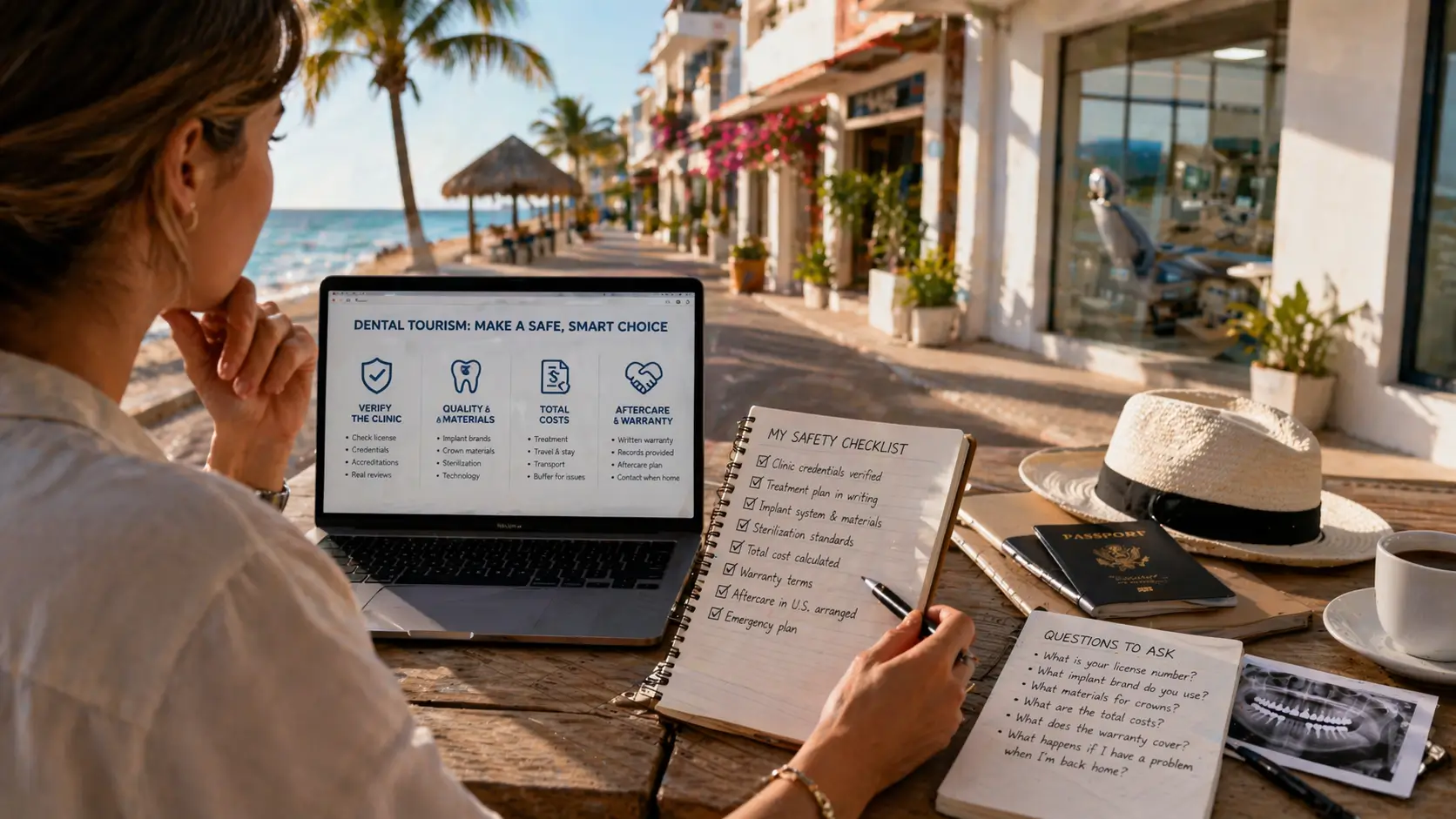
A smart decision starts with figuring out your real savings—and being honest about whether you can get safe, consistent dental treatment before, during, and after your procedure.
Consider these four realities before moving forward:
Actual savings vs. the headline price. That quote that looks $6,000 cheaper? Add flights, hotel, food, transportation, and lost work time. Sometimes the math still works out great. Sometimes the savings disappear.
The type of procedure matters. Dental tourism rarely makes sense for routine cleanings or simple fillings. It's worth considering for high-cost work—like implants, full-arch restoration (All-on-4 or All-on-6), or multiple crowns—where the price difference is big enough to justify the trip.
Follow-up care back home. Can you find a dentist at home who will support the work? Some will. Others won't—especially if your records are incomplete. Policies vary, so ask before you commit.
Your personal risk tolerance. What if you need an extra trip, an unplanned procedure, or urgent care at home? If the worst-case scenario would cause real financial hardship, the risks may outweigh the savings.
Dental tourism works best when the savings are real and you can secure clear records plus reliable aftercare. If either piece is missing, you're not solving your problem—you're swapping one stressful bill for a different kind of headache.
One way to cut the uncertainty: compare clinics using the same criteria every time—credentials, materials, real pricing, aftercare plans. That's exactly what the Globalcare app does for Mexico-based care, connecting you to a curated network with transparent pricing, verified reviews, and bilingual support.
Dental tourism is about accessing affordable dental care for costly procedures—not routine cleanings or fillings. Most people cross borders for expensive work: implants (including full-arch options like All-on-4), root canal treatment, multiple crowns and bridges, veneers, dentures, or larger cosmetic dentistry “smile makeover” cases.
Dental tourists tend to fall into one of three groups. There's the "no insurance, impossible price" patient—you need an implant or multiple crowns, you're paying cash, and what you were quoted at home feels completely out of reach. Then there's the "I need this done sooner" patient—you've been stuck on waitlists or bouncing between offices, and a clinic abroad can fit you in faster. And there's the "big makeover" patient—combining cosmetic work with travel because it's easier to justify time off when there's a trip built in.
There's no single right answer. You’ll find excellent dentists—and poor ones—in every country. Understanding the potential risks before you commit is what separates patients who have good outcomes from those who don’t. What changes most across borders is oversight, continuity of care, and what your options are if something goes wrong.
Here's a quick way to figure out if your situation leans toward “worth it” or “too risky.”
If you're considering Mexico, where you go matters as much as which clinic you choose. Some patients want quick access and short flights; others need a bigger city with specialty depth; others prefer the lower costs of border towns. Globalcare supports treatment planning across destinations including Cancún, Los Cabos, Los Algodones, Puerto Vallarta, Playa del Carmen, Guadalajara, Mexico City, Querétaro, Monterrey, Ciudad Juárez, and Mérida—so you can match location to your budget, timeline, and comfort level.
Two people can go to the same clinic and have very different outcomes. Before you book, take an honest look at four key areas.
Your overall health and healing ability. Poorly controlled diabetes, heart disease, autoimmune conditions, and certain medications like blood thinners can increase bleeding and slow healing. Smoking is linked to higher implant failure rates—research backs this up, though results vary by person (J Evid Based Dent Pract, 2017). A well-managed chronic condition doesn't automatically rule you out—but it does require careful planning.
Age and bone quality. Age alone doesn't disqualify anyone—successful implants are possible at any age with the right evaluation. That said, bone density, gum health, and medical history can all affect your dental health, healing, and overall risk. If a clinic tells you you're a “guaranteed candidate” without imaging and a proper exam, slow down.
Your travel situation. If getting back quickly for adjustments would be hard—due to work, distance, or schedule—your backup plan may fall apart exactly when you need it.
How the treatment is structured. Many procedures happen in stages. Implant surgery usually means placement first, then a crown months later—typically 3–6 months[1], though healing varies. That can mean multiple trips, or finding a dentist at home who will finish the work using your full records.
A slick website and glowing reviews are nice—but they're not proof of quality. What matters more is verifiable detail—and the quieter signals you notice in how the clinic actually operates.
Imaging that matches the complexity. For implants and full-arch cases, expect discussion of current imaging (often CBCT or 3D), bone quality, nerve or sinus proximity, and whether grafting is likely. If a clinic avoids specifics or can't explain the plan clearly, your risk of complications rises.
Prosthetic fit and bite details. Many painful post-trip fixes involve bite and fit issues—crowns that feel high, bridges that trap food, full-arch teeth that fracture, or gums that stay inflamed due to poor contours. Ask how bite is checked, how adjustments work, and what happens if something doesn't fit on delivery day.
Quality materials you can verify later. A reputable clinic names the implant system (brand and model line) and provides documentation for future care. Widely used manufacturers include Nobel Biocare, Straumann, Zimmer Biomet, BioHorizons, Neodent, and MIS. The point isn't "pick a brand"—it's traceability, because future repairs depend on compatibility.
Case photos that match your procedure. Ask for before-and-after images with consistent angles and, for larger cases, follow-up shots—not just day-of glamour photos. Ideally, the clinic can show cases with starting conditions similar to yours.
Patterns in negative reviews. One bad review can happen anywhere. But repeated complaints about the same issues—implants failing, crowns popping off, surprise fees, pressure to pay cash, missing records, poor responsiveness after you leave—deserve serious attention. Check multiple platforms, not just the clinic's own testimonials.
Quality problems don't always look dramatic on day one. They often surface later as a cycle of "adjustments," pain, breakage, or redo work—especially when the clinic isn't set up for structured follow-up visits.
Here's something that catches many people off guard: serious complications often don't appear while you're still abroad. Infections, bite problems, nerve symptoms, and fit issues can emerge days or weeks later—when you're home and the original dentist is an ocean away.
The challenge is that healing timelines don't match vacation timelines. A realistic aftercare plan acknowledges the typical checkpoints for your type of work.
For implants: A post-op check soon after surgery is standard, but the bigger question is what happens over the following months while the implant integrates (typically 3-6 months[2] before a final crown, though this varies). If you're flying home quickly, you need clarity on who monitors healing, manages inflammation, and confirms the implant is stable before final restoration.
For crowns and bridges: You may feel fine immediately but develop bite pain, jaw soreness, or sensitivity after a week of real chewing. You need a clear plan for adjustments and what's covered if something chips or de-cements.
For full-arch cases and dentures: Temporary teeth often need adjustments as swelling changes and you learn to chew again. Long-term success depends on maintenance, bite stability, hygiene access, and prompt repair if something fractures.
Common post-travel issues that dentists in patients’ home countries report seeing include persistent pain or swelling, loose crowns or bridges, implant mobility, and infections needing antibiotics or drainage. Without a written post-op plan and responsive communication, patients sometimes end up in urgent care or the ER—expensive settings poorly suited to managing complex dental reconstruction.
You don't need dental training to spot the basics. When you arrive—or even during a video consultation—pay attention to what's actually happening, not what the brochure says.
Look for basic hygiene: fresh gloves for each patient—not the same pair that touched phones, keyboards, and door handles before touching your mouth—plus visible handwashing. Look for sterile instruments: sealed packs opened right in front of you, and clean instruments kept separate from used ones—not unwrapped tools already sitting out when you walk in. Watch the workflow: do staff keep dirty items away from clean areas? Sloppiness here is a real warning sign.
High-quality clinics will gladly show you their sterilization area and explain how instruments are cleaned and packaged. You can ask how they verify sterilization and how often equipment is serviced.
Standards vary not just between countries, but between clinics in the same city. If the basics look sloppy, the things you can't see are probably worse—substandard infection control is one of the fastest ways a bargain price can turn into a serious health problem.
In the U.S., you know the system—dental boards, complaint processes, and legal options are clear and accessible. Abroad, the rules vary by country, and even with a valid complaint, resolving it across borders can be slow and costly. Set realistic expectations: even if you're in the right, enforcing a judgment in another country is hard—and the time and cost it takes can wipe out any savings. Your best protection is avoiding the need for a dispute in the first place.
Before treatment, protect yourself:
Embassy note: U.S. embassies sometimes provide lists of local medical providers as a starting point, typically with disclaimers. These lists are not endorsements and don't verify quality.
The nastiest surprises aren't obvious costs like flights. They're unexpected clinical add-ons, replacement parts, extra days you didn't plan for—and the cost of handling complications once you're home.
Watch for these common budget-breakers:
If you can't get a line-item estimate—or if the clinic gets vague when you ask what happens when they find more issues mid-procedure—don't move forward. This is exactly where budgets collapse and the promise of savings disappears.
pre-screened dental clinics in Mexico
You'll find quality dentists working at foreign clinics across all these countries—but the oversight systems around them are different. The biggest practical differences are how credentials are verified, how clinics are regulated, how easy aftercare is to get, and how disputes are handled.
Dental travel now extends well beyond Mexico to destinations like Costa Rica, Thailand, and other healthcare hubs. One thing many patients overlook: warranties aren't standard everywhere. Some clinics offer strong coverage; others offer limited protection that only kicks in if you fly back at your own expense. Your destination—and the specific clinic's policies—directly affect how protected you are when something needs to be fixed.
Prices vary by materials, grafting needs, imaging, lab work, and prosthetic complexity. These ranges represent general estimates and may not reflect all markets or individual circumstances. Always request a line-item quote. Last checked: April 2026. Implant Crown Cost: A Thorough Breakdown[5]
dental destinations beyond Mexico
A dental probe is the instrument your hygienist uses to measure what’s actually happening beneath the surface—not what looks fine from the outside. The PROBE framework works the same way for clinic evaluation: five checks that get past the marketing and into the details that determine whether your trip goes well.
Before booking, ask for the treating dentist’s full name, license or professional ID, and training credentials—especially for implants, sedation, or full-arch cases. Then verify through official channels yourself. Not through the clinic.
Confirm who performs each step. It’s completely reasonable to ask: “Will the dentist I’m consulting with be the same one operating?” If a clinic is evasive about identifiers or unclear about who handles what, that’s the answer you need.
When comparing clinics, consistency matters. A smart approach: start with a curated directory where clinics are pre-screened and profiles include credentials, reviews, and procedure details—then verify what’s most important for your case. That’s exactly what the Globalcare app does for Mexico: cutting through the noise so your research is focused and efficient.
Push for a line-item estimate that covers everything—imaging, sedation, surgical fees, lab work, materials, medications, taxes, and follow-up visits. A single “all-inclusive” price is not enough.
Then ask the two questions that prevent the worst surprises: “What usually changes the price in a case like mine?” (grafting, extractions, temporaries, material upgrades) and “If something breaks or doesn’t fit, what’s covered and what’s on me?”
Ask for a written follow-up schedule—what’s planned while you’re still in-country, and what the protocol is after you leave. You need a direct contact for post-op questions (including evenings and weekends), clear steps to follow if something gets worse, and full clinical records your home dentist can actually use.
The goal is simple: if something feels off two weeks later, you’ve already mapped out exactly who to call and what to do—before you ever board the plane.
If a clinic claims certifications, ask for copies and verify directly with the issuing organization—not the clinic’s word alone. For implants, request traceability documentation: brand, model number, and component IDs you take home. Ask to see real before-and-after cases for situations similar to yours, and an honest account of how they handle complications—not just “that never happens here.”
Quality dentistry isn’t always visible to patients. Material traceability is how you document what went in—and protect yourself if something fails later.
Get warranty, repair, and refund terms in writing before you pay a deposit—not after you land. Confirm timeframes, exclusions, and whether covered repairs require you to return. Ask whether the clinic carries professional liability insurance.
Build an emergency contingency before you travel: Where’s the nearest hospital if you need one? Who makes the referral if a specialist is required? What records are you guaranteed to receive on-site if you need urgent care at home?
4–8 weeks before: Get 1–3 full treatment plans with itemized quotes. Ask what's included, what's excluded, and what typically changes the price.
2–4 weeks before: Confirm insurance coverage and exclusions in writing. If possible, find a dentist at home for follow-up or emergency support and confirm what records they'll need.
1 week before: Reconfirm appointments, costs, materials, and who your treating dentist will be. Save copies of consent forms, aftercare instructions, warranty terms, and emergency contacts.
Use email whenever you can. A clear paper trail is one of the most useful protections you'll have.
Email template you can copy/paste:Subject: Request for itemized treatment plan, materials, and aftercare (for review before booking)Hi [Clinic Name],I'm considering treatment for [procedure]. Before I schedule and pay, please send:1) An itemized written estimate (imaging, anesthesia/sedation, surgery, lab, materials, taxes/fees, follow-ups).2) The treating dentist's full name and license/ID, and who will perform each part of the procedure.3) The exact materials/brands (e.g., implant system + component identifiers; crown material).4) Written warranty/repair terms (what's covered, for how long, exclusions, and whether I must return).5) A written aftercare plan and emergency contact details (including after hours).6) What records I will receive (clinical notes + imaging) and in what language/format.Thank you,[Your Name]
Before you pay or receive anesthesia, confirm nothing has changed—the treating dentist, the plan, the materials, or the final price.
Meet the treating dentist—not a last-minute substitute unless you explicitly agreed to that. Review the written plan you were quoted: confirm the teeth involved, the steps, and the amount due that day. Confirm materials before placement; for implants, ask to see packaging with brand and model numbers you can keep. Watch infection control in real time: sterile packs opened in front of you, clean surfaces, glove changes, hand hygiene.
If anything is explained verbally only—or you’re asked to sign a form you can’t read—stop and ask for written documentation or an interpreter before proceeding. Language barriers should never compromise your ability to give informed consent.
If you see shortcuts or feel rushed, pause. Momentum is never a good reason to accept uncertainty with your health.
Before you leave, collect everything: clinical notes, imaging, prescriptions, implant and component IDs, and written aftercare instructions. Take clear photos of your mouth—and your face if there's swelling—as a healing baseline. Schedule your first follow-up at home, or at least start the process, before you travel back. Organize invoices, warranties, and written communications in one folder for reimbursements or future care.
If anything feels wrong, document it immediately—photos, a written description, the date and time. This matters for any warranty discussions later.
A smart rule of thumb: assume the final total will exceed the quote—especially for complex work. Most patients budget a contingency of 15–25%. For staged or full-arch cases, some plan for 25–40% on top of the quoted price.
Single Implant[3] costs, Veneers (per tooth)[4] pricing, and All-on-4 / All-on-6 (per arch)[6] totals can vary widely depending on what's included in the plan.
Last updated: April 2026. These ranges combine U.S. and abroad pricing to show the full market spectrum; see the country comparison table above for destination-specific costs. Your actual price depends on materials, lab quality, included services, case complexity, and location. Apply contingency percentages to your specific quoted price from your chosen clinic—not to these general ranges. Always request and review an itemized plan.
If cost is your main concern, affordable dental care doesn’t always require a passport. There are options closer to home that keep continuity of care and legal protections intact.
Dental schools at accredited universities offer reduced-cost care supervised by licensed instructors. Appointments take longer, but the oversight is real and consistent. Phased treatment plans let you break care into stages—tackle urgent problems first and space out the rest—turning one large bill into a manageable schedule. Financing through dental offices varies in rates, but you keep local follow-up and clearer legal options if something goes wrong. And don't overlook cash-pay conversations: if you're paying out of pocket, ask about discounts, alternative materials, or a scaled-back plan that still protects your health and function.
These aren't always the cheapest options—but they cut the two biggest risks of dental tourism: aftercare gaps and limited legal recourse.
Keep this manageable—match your next step to where you actually are.
If you're in pain or have swelling: Get a local evaluation first. Travel is rarely the right first step for an active infection or dental emergency.
If this is elective or cosmetic: Slow down and vet thoroughly. Time is your biggest advantage.
If this is complex reconstruction: Plan like it's a project. Documentation, aftercare, and a contingency budget aren't optional—they're part of the procedure.
Run every clinic you’re seriously considering through the same five-point check. This keeps price from overriding safety—and makes it easy to compare two clinics side by side on what actually matters:
One firm rule: If any category scores 0–1—they won't share a license, won't provide records, or won't put warranty terms in writing—treat that as an automatic fail. Don't average it out. For complex work like full-arch cases, aim for 20+/25 with no weak spots.
If you're still in research mode, Mexico is where most U.S. patients find a strong balance of savings and manageable travel. As this guide shows, the risk isn't “Mexico” as a country—it's choosing a clinic without verified credentials, clear pricing, and a real aftercare plan.
The Globalcare app lets you compare pre-screened clinics side by side. Every clinic goes through Globalcare's selection process before being listed. In the app, you can filter by procedure type, location, and your preferences; see transparent pricing, verified details, photos, and real reviews all in one place; message clinics and request multiple free quotes to compare plans and timelines; and book once you've found the right fit.
It's a direct path from research to a plan—with fewer surprises.
Author: [Full Name]
Medical Reviewer: [Reviewer, DDS/DMD or Specialist], verified [Month/Year]
Last Full Update: April 2026
Research methodology: This guide draws on regulatory and professional resources (including ADA licensure resources and country-specific licensing bodies), peer-reviewed literature on implant outcomes and complications (example: J Evid Based Dent Pract, 2017), interviews and anecdotal input from U.S. dentists who treat complications after dental tourism, and cost ranges based on 2024-2026 patient quotes and clinic estimates.
This guide is educational and not a substitute for individualized dental or medical advice. Individual circumstances, health conditions, and treatment needs vary—consult with qualified dental professionals before making treatment decisions.
Get in touch to get started!
Our team of experts will ensure your all-on-4 dental implants journey is safe and easy. We're dedicated to guiding you to your new smile every step of the way!
ConnectConcierge Services

Trusted Dentists

Safe Locations

Concierge Services
Trusted Dentists
Safe Locations

Disclaimer: Dental Cost Estimation Calculator
This Dental Cost Estimation Calculator is designed to provide users with estimates of potential savings when seeking dental treatments abroad compared to the cost of similar procedures in the United States. However, please be aware of the following important information before using this tool:
1. Estimations Based on Publicly Available Data:
The estimates provided in this calculator are derived from publicly available data sources, including average procedure costs, exchange rates, and other relevant information. These figures may not reflect the exact costs of your specific treatment or location. Estimations include non-dynamic assumptions for travel and lodging costs that may not reflect the actual costs at the time of your research.
2. Quantitative Model Assumptions:
The calculations are based on assumptions and data inputs that may not account for all factors influencing dental treatment costs. Variations in individual treatment needs, dentist fees, and other variables can significantly affect the final expenses.
3. No Substitute for Professional Advice:
This tool is not a substitute for professional dental advice. Before making any decisions about your dental treatment, it is crucial to consult with a qualified dental professional who can provide you with a personalized assessment of your needs and potential costs.
4. Currency Exchange Rates:
Estimates involving foreign treatment costs rely on currency exchange rates, which can fluctuate. The rates used in this calculator may not accurately represent the current market rates at the time of your treatment.
5. Geographic and Facility Variations:
Dental costs can vary significantly based on geographic location, dental facility, and the complexity of the procedure. The estimates provided are general in nature and may not reflect the specific conditions in your chosen destination or dental clinic.
6. Non-Inclusive Costs:
This calculator may not account for additional expenses such as per diem costs in destination or unforeseen complications during or after the procedure. These costs can substantially impact your overall expenses.
7. Liability Waiver:
By using this calculator, you acknowledge that the estimates provided are for informational purposes only, and Globalcare Network Inc or any of its representatives bear no responsibility for the accuracy of the estimates or any decisions made based on them.
8. Independent Research Recommended:
It is strongly recommended that you conduct independent research, obtain quotes from dental professionals, and consider all relevant factors when making decisions about dental treatment abroad.
In summary, while this Dental Cost Estimation Calculator aims to provide helpful information, it should not be the sole basis for your decision-making process. Your individual circumstances and dental needs may differ, and it is essential to seek professional advice and conduct thorough research before pursuing dental treatment abroad

