Tooth Preparation for Veneers: What Happens to Your Teeth
May 4, 2026

Back to Blog
.png)
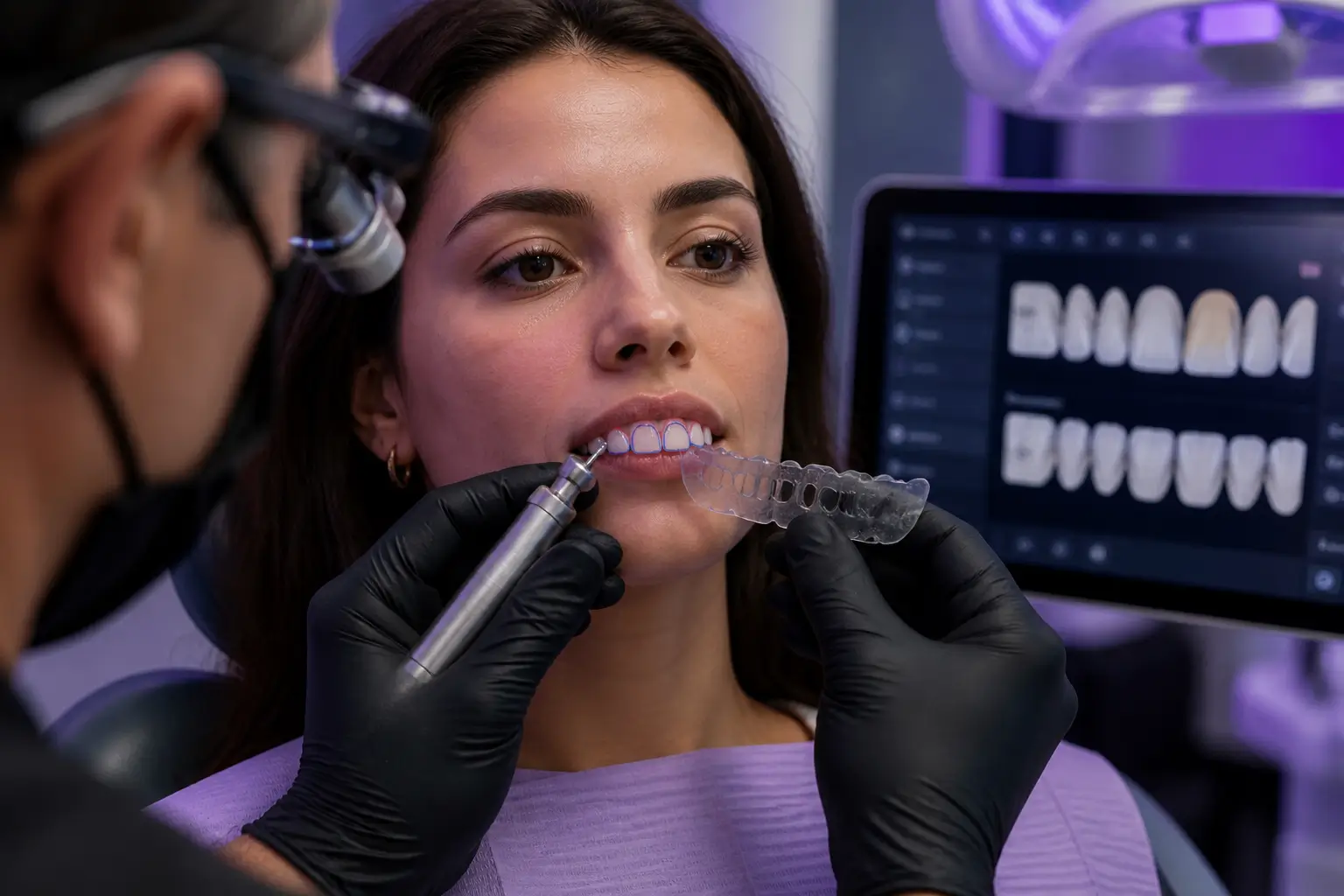
Here's the honest truth: tooth preparation for veneers is a one-way street. Most cases go smoothly with a skilled clinician and proper planning—but when patients do feel blindsided after veneers, it usually isn't because porcelain is unpredictable. It's because the planning, measuring, and documentation were too loose before anything irreversible happened.
How teeth are prepared for veneers directly affects outcomes. Your dentist reshapes your teeth to make room for veneers that look and feel like natural teeth. In a well-executed case, that reshaping is mapped out tooth by tooth and verified with guides—silicone reduction stents, depth-cut burs, or digital planning tools. If reduction is being estimated by eye without verification steps, that's a legitimate concern to raise.
Enamel is your best ally here, and it doesn't regenerate. Bonding to enamel tends to be more predictable than bonding to dentin, which is why conservative preparation matters—not just for preserving tooth structure, but for long-term durability. You want a plan that protects enamel wherever your bite, alignment, and shade goals allow.
The smartest move? Gather documentation before the first irreversible step. Asking for photos, a written plan, the lab name, an itemized estimate, and warranty terms isn't being difficult. It's basic quality control. Reputable clinics welcome this because it prevents misunderstandings and simplifies any follow-up care.
Many veneer problems don't originate with porcelain—they start with rushed decisions and vague commitments. If a clinic pushes you to "lock in a price today" or insists on same-day drilling without giving you time to review details, consider that a serious warning sign. Tooth preparation is permanent[1]. The best time to slow down is before anything irreversible begins.
Try this approach: give yourself 24 to 72 hours to collect and review verifiable documents before making your final decision. A quality clinic won't feel threatened by this—they'll appreciate it.
At minimum, you should have these items in writing before moving forward: a dated, itemized estimate covering all fees (exams, preparation, temporaries, lab work, try-in, bonding, follow-ups, and any extras); authentic before-and-after photos from that specific clinic, ideally showing preparation and temporary stages; a visit-by-visit timeline explaining what happens at each appointment; and clear warranty, repair, and emergency policies.
Ask for a consultation checklist you can take home. It should identify which clinician performs each step, the appointment sequence with dates, and the total price you're agreeing to. If a clinic can't be precise now, expect similar vagueness if adjustments are needed later.
If you genuinely need to move quickly—due to travel schedules, time off work, or an upcoming event—protect yourself with a dated consent form and a written modification or cancellation window before permanent preparation begins. If a clinic won't provide any off-ramp, you're absorbing most of the risk.
Veneer planning isn't just about how your smile looks next month—it's about keeping your options flexible for years to come. The condition of your teeth before veneers—and the decisions you make at this stage—affect how much enamel comes off (and whether bonding stays mostly on enamel versus dentin), how much room exists for esthetic adjustments, how sensitivity is managed, and what rework looks like later—a small refinement versus a full remake.
More conservative preparation, especially when it stays within enamel, generally leads to more predictable bonding. Research supports that enamel bonding outperforms dentin bonding, which is why many dentists aim to preserve enamel where possible. That said, optimal preparation depth depends on your specific circumstances—there's no universal magic number.
A detailed plan upfront helps preserve your options: conservative reduction where appropriate, more predictable bonding when most of it remains on enamel, better esthetic outcomes because the lab and dentist work from defined targets, and easier repairs because your starting point is documented.
These questions are deliberately straightforward. They help you collect verifiable information without needing a dental degree:
If answers stay vague—especially about preparation depth, temporaries, and aftercare—consider getting a second opinion before committing.
A beautiful veneer result is built on process. Think of it as a transparency standard: you want decisions that are documented, traceable, and verifiable—especially concerning preparation depth, materials, lab communication, and aftercare.
In practical terms, seek a clinic that can clearly explain what they're recommending and why for your specific teeth (not generic cases), plus records you can reference later: your photos, your plan, your lab, your warranty terms, and your aftercare contacts.
It helps to understand the layers your dentist works with. Enamel is the hard outer shell—generally the best bonding surface, and it doesn't regenerate once removed. Dentin sits underneath, is more sensitive, and behaves differently during bonding, which can affect comfort and long-term predictability if significantly exposed.
Tooth prep for veneers falls on a spectrum. When teeth are shaved for veneers, the exact amount varies based on tooth anatomy, alignment, shade goals, and bite—no single number works for everyone. The ranges below are commonly referenced for facial (front-surface) reduction, but your dentist should determine what's appropriate for each tooth individually:
Where reduction happens matters as much as how much. Depending on your bite and goals, a dentist may adjust not only the front surface but also edges and contact areas so the veneer seats properly without bulky overhangs. That's normal—what matters is that it's planned and measured, not improvised.
Material choice influences preparation. The preparation of teeth for porcelain veneers depends on each ceramic's strength and opacity properties, affecting how much space the dentist needs. Feldspathic porcelain is often selected for high translucency and lifelike esthetics and can sometimes be made very thin, though major color changes usually require more reduction. Lithium disilicate (e.max) balances strength and esthetics, with preparation frequently in the mid-range (around 0.3–0.7 mm). Zirconia is typically chosen when strength is paramount—for example, with heavy bite forces—though achieving optimal esthetics requires skilled lab work.
One non-negotiable quality marker: your dentist should show you a tooth-by-tooth preparation plan before any drilling begins.
Reference for minimal-prep ranges: ~0.2–0.5 mm or less[3]
Reference for conventional prep ranges: ~0.3–1.0 mm[2]
Veneers perform best on a healthy foundation. Your teeth before veneers should be evaluated for any issues that could shorten veneer lifespan or create complications. Before preparation, your records should confirm that your dentist addressed these concerns.
Gum health is essential—inflammation and bleeding should be controlled before final impressions and bonding. Cavities and existing restorations should be addressed first. Bite analysis matters because deep bite, edge-to-edge bite, crossbite, and other patterns can increase chipping or debonding risk if not planned for. If you grind or clench (bruxism), you need a plan that typically includes material selection plus a night guard and bite management strategy. And if alignment changes could reduce how much tooth needs removal, many dentists will discuss orthodontic alternatives—even if you ultimately decide against them.
Pre-treatment isn't a delay—it's risk reduction. Complications become more likely when underlying gum, bite, or decay issues aren't handled first.
Veneers are a team effort. A strong plan can be undermined by weak lab communication or inconsistent handoffs between clinicians.
Find out who prepares the teeth—their veneer experience (approximate cases per year) and relevant continuing education. Ask which lab is used—a reputable lab should be clearly named. You don't need a famous lab, just one that's consistent and communicative. Ask who bonds the veneers—ideally, the clinician who prepared the teeth stays closely involved at delivery because margins, shade, and bite details are easier to manage with continuity.
Bonding details matter more than marketing claims. You don't need a chemistry lesson, but expect a clear explanation of the try-in process (how you preview shade and shape before anything becomes permanent), isolation (how moisture is controlled, since saliva contamination can reduce bond reliability), and the cement plan (what type is used and how cleanup and bite checks are handled).
Your estimate should read like a mini-contract, not a marketing brochure. At minimum, it should specify preparation and temporaries (type, material, duration), lab timeline (expected time in temporaries and what could extend it), try-in and final seating (whether you get a preview and can request changes), post-op adjustments (who handles bite tweaks and for how long), and costs clearly itemized with extras spelled out.
If you're traveling—especially internationally—insist on written policies for payment and currency rules (what currency, whether there's a fixed exchange rate, whether card payments carry extra fees), schedule changes (what happens if the lab is delayed or a remake is needed), and aftercare once you're home (telehealth check-ins, partner clinics, written guidance for local dentists, and what's covered if you need help).
If you need repair after returning home, some local dentists may be reluctant to work on veneers done elsewhere. That doesn't mean you shouldn't travel—it means your clinic's written aftercare agreement matters even more.
Temporary veneers aren't a throwaway step. Good temporaries protect your teeth prepped for veneers and let you test-drive the look and bite before anything becomes permanent. They shield reduced tooth structure, can reduce sensitivity, and allow you to evaluate shape, contour, and speech. They should fit well—repeated debonding, constant pain, or inflamed gums signal poor fit and should be addressed promptly.
Duration: Most patients wear temporaries for about 1 to 2 weeks, though travel cases can be shorter or longer depending on lab workflow and whether adjustments or remakes are needed.
Sensitivity: Mild cold sensitivity or brief "zingers" can occur after preparation, especially in the first few days, and typically improve over time. Individual responses vary. Pain that keeps you up at night, swelling, or worsening discomfort warrants immediate contact with your clinic.
You should receive written instructions covering what to avoid eating (very hard, sticky, or chewy foods), how to brush and floss safely around temporaries, warning signs to watch for (persistent pain, swelling, cracks, a too-high bite, repeated debonding), and emergency contact information—especially important if you're traveling.
A transparent veneer process gives you checkpoints—moments to confirm the plan is being followed. You don't need to micromanage. You simply want to understand what's happening, what's normal to feel, and what you should have when you leave.
You should leave with actual documentation, not just reassurance. Quality clinics typically record gum and bite evaluation findings, radiographs and/or 3D imaging when indicated, baseline photos, digital smile design or wax-up planning when available, and written pre-treatment recommendations if you need gum care, fillings, or bite management first.
Before leaving, ask for dated intraoral photos, any bite records or scans taken, and a short written summary you can review (and sign, if required) so you can confirm it matches your discussion.
This is the irreversible stage. Quality indicators include adequate numbness with check-ins if you feel anything sharp, guided reduction using silicone stents, depth-cut burs, or digital guides rather than estimation, measured reduction verified against the plan as the dentist works, and clear communication with willingness to pause for questions.
One simple observation: you should see a guide or stent being used and checked, not just a handpiece moving quickly from tooth to tooth with no measuring step. Speed alone isn't quality. If the process feels rushed or unexplained, pause and ask for clarification.
Clinics may take impressions using a digital scanner (iTero, 3Shape, Medit) or high-precision traditional impression. Temporaries should feel stable and comfortable in your bite—persistent odor, gum trauma, or repeated loosening can signal poor fit and should be corrected. You should know the lab name and what shade information was sent.
Two practical requests that help later: ask for a photo of your prepared teeth for your records, and ask whether the clinic can share a screenshot or photo of the final scans or impressions being sent to the lab. You're building a traceable record. If traveling, have a written plan for temporary repairs and emergency visits.
Bonding is where "looks good" becomes permanent. A careful delivery typically includes a try-in where you preview shade and shape and can request adjustments before final cementation, isolation (often a rubber dam) to control moisture, a bite check for high spots with adjustments so veneers don't take damaging forces, and written aftercare guidance.
Before leaving, ask for a follow-up schedule (even if virtual), a written plan for handling sensitivity or high bite, and the emergency contact route that actually gets a response after hours.
This is what most people really want to know: How will this look in everyday life? How durable is it? What happens if something small goes wrong?
Match the material to your situation, not a trend. If you're a heavy grinder, durability and bite design matter as much as material—expect a night guard recommendation and a clear bite management plan. If you have thin enamel or existing fillings, ask how much bonding will be on enamel versus dentin or restorations, and how that affects longevity expectations. If you want a major whitening change, you may need more space (more reduction) or a different ceramic strategy to avoid an opaque, overly thick look.
Maintenance and small fixes are part of veneer ownership. Ask what the clinic typically does for minor chips, rough edges, or bite adjustments, and whether those visits are included for a set period after placement.
You don't need to guess how much tooth was removed—you can ask to see it clearly. When reviewing teeth prep for veneers before and after documentation, the most trustworthy prep photos include consistent angles and lighting (before, prep, temporaries, final from similar viewpoints), clear captions explaining what stage you're viewing and what changed, scale references when possible, and dates or timestamps—especially for images supporting claims about minimal prep or same-day transformations.
Watch for signs that prep photos may be misleading: heavy smoothing or filters, cropped images hiding the gumline or tooth edges, only after photos, or a portfolio that never shows prepared teeth or temporaries.
Temporaries are a common source of frustration, especially for patients traveling for care. Watch for repeated debonding (occasional loosening can happen, but it shouldn't be constant), rough or overhanging margins that inflame gums and complicate cleaning, uncomfortable bite from high temporaries that can trigger soreness or headaches, and visible cement lines or trapped cement that looks bad and irritates gums.
A reasonable clinic response means that if a temporary pops off or cracks, you can reach them quickly and get a clear plan for same-day or next-day repair while in town. If traveling, know beforehand whether repairs are included, billed separately, or handled through a partner clinic.
For practical self-protection: get temporary repair arrangements in writing, especially for international treatment. Follow diet rules—skip sticky candies, ice chewing, and hard nuts. Ask about activities: if you play contact sports, get guidance and use a mouthguard if recommended. Call early if something feels wrong; don't wait for pain to become severe.
Tooth preparation is permanent. Once enamel is removed, the tooth generally needs ongoing coverage—a veneer, and sometimes a crown—to remain protected and functional.
The most important safety measure isn't a brand of ceramic. It's documentation. Before preparation begins, you should have a dated, tooth-by-tooth plan with planned reduction targets; documentation of how prep will be measured (stent, depth cuts, digital guide); original pre-treatment photos (your baseline); case-specific informed consent matching what's actually planned; a written temporaries plan specifying what you'll wear, for how long, and what happens if they fail; expected sensitivity guidance; written warranty and repair terms with timeframes and conditions; and a modification or cancellation policy that applies before irreversible prep begins.
This paperwork protects you—and it protects good clinicians by ensuring alignment.
pre-screened dental clinics in Mexico
Cost matters, but it's not the whole equation. The real difference often comes down to follow-up access, documentation quality, and how complications are handled.
In the U.S., patients typically pay more per tooth, but follow-up is more accessible and consumer protections can be clearer. Many practices work with established labs and have structured recall and maintenance systems.
In Mexico, pricing for some materials can be meaningfully lower, and excellent clinicians absolutely exist—but quality and aftercare vary widely by clinic, and savings depend on the material and specific provider. If you're traveling, the question to answer is straightforward: Will this clinic support me just as clearly after I fly home as they do before collecting payment?
Consider the cross-border realities affecting risk. If something needs adjustment, are you willing and able to travel back? Legal and consumer rights differ—dispute resolution is often simpler in your home jurisdiction. Travel logistics add up: extra days off work, flight changes, hotel costs, and potential buffer days for remakes. Travel insurance typically doesn't cover elective dental complications—most policies explicitly exclude elective procedures, so verify your specific coverage. And know the currency, exchange-rate policy, and any payment protections.
That's where a verification-first approach becomes practical, not excessive. Some platforms, such as Globalcare, connect U.S. patients with dental clinics in Mexico, offering pricing information, credential verification, and logistical support—which can simplify research for those considering cross-border care. Similar services may also be available; evaluate any platform's claims independently.
Confirm dentist credentials through the appropriate licensing body—state boards in the U.S., or in Mexico, verify the professional license (cédula) and clinic legitimacy. Reverse-search before-and-after photos to check whether images appear elsewhere online. Ask for the lab name and confirm it's a real operating lab. Request a full case sequence, not just final shots. Watch for inconsistencies like reused backgrounds, repeated "same smile" shapes across different patients, or missing prep and temporary documentation.
For a faster way to compare Mexico options without skipping verification, you can start by reviewing clinic profiles—credentials, photos, reviews, and pricing—through platforms like the Globalcare app or similar services, then request clinic-specific documentation before committing.
Timelines vary by case complexity and lab workflow, but most veneer cases require adequate time for temporaries, fabrication, and adjustments. A consultation or exam can happen the same day as preparation, but you should never feel pressured to combine them. Preparation plus temporaries may take 1 to 3 days depending on the number of teeth and refinements. Lab fabrication commonly takes several days, with complex cases requiring more time. Try-in and adjustments often need at least one additional appointment. Final bonding and bite refinement should be unhurried and documented.
A useful buffer-day guideline: plan at least 1 to 2 extra days beyond the perfect schedule in case you need tweaks, a remake, or time for gums to settle before final bonding. Rushing the last appointment is one of the easiest ways to end up with avoidable regrets.
Destination choice affects convenience and follow-up. Depending on your budget, flight options, and time off work, different locations make sense—Cancún, Los Cabos, Los Algodones, Puerto Vallarta, Playa del Carmen, Guadalajara, Mexico City, Querétaro, Monterrey, Ciudad Juárez, and Mérida all have their pros and cons.
Ask for a written aftercare and warranty agreement clearly stating what happens if something chips, debonds, or needs adjustment after you return home. Good clinics often offer language like: "For any failure within [X] months, we provide repair or remake at no professional fee within [X] days. If you're unable to return, we'll coordinate and partially reimburse care by a verified local dentist up to [$Y]."
You can also request clarity on response times ("If I message after hours, when do I receive a reply?"), decision rights ("Who decides whether it's a repair versus remake?"), and local support ("If I'm home and a veneer feels high or rough, who can I see, and what will you cover?"). If the clinic won't put aftercare terms in writing, assume you may be self-funding most post-treatment fixes.
Pricing varies considerably by city, dentist experience, materials, lab, and case complexity. The ranges below are common consumer-facing estimates, but your written quote is what ultimately matters.
Note: Mexico ranges assume an approximate 17:1 MXN:USD conversion; real-time exchange rates change. When converted to USD, feldspathic porcelain typically shows the clearest savings in Mexico; for lithium disilicate and zirconia, converted prices may be comparable to U.S. ranges depending on the clinic. Every quote should be dated and clearly labeled with the currency. Actual prices can vary significantly based on clinic, location, and case complexity.
When comparing providers across borders, the most useful price transparency is side-by-side, line-item clarity: what's included, what's not, and what happens if the case runs long. If you're gathering real numbers, dental tourism platforms can help you filter by treatment type and location and request quotes directly from clinics, making apples-to-apples comparison easier.
Composite (direct)[4] and Porcelain (feldspathic)[5] pricing can vary widely, and Mexico costs for Porcelain (feldspathic)[6] are often quoted in MXN. U.S. ranges for Lithium disilicate (e.max)[7] and Zirconia[8] also depend heavily on materials, lab work, and case complexity.
This doesn't replace an exam, but it helps you enter consultations with clearer expectations. Consider writing down your answers and bringing them to your appointment as a summary. That transforms a sales-style consultation into a focused clinical conversation.
Think about where you likely fall. May be ready now: generally healthy teeth and gums, stable bite, and goals veneers can realistically meet—though only an in-person exam confirms candidacy. May need preliminary work first: gum care, fillings, whitening strategy, or a grinding/bite plan. Orthodontics might be worth discussing: if alignment changes could reduce how much tooth needs removal. May not be a candidate right now: uncontrolled gum disease, high decay risk, teeth still developing (in younger patients), or expectations that don't match what veneers can deliver.
Marketing can be polished; your medical decision should be evidence-based. Be skeptical of portfolios that only show final results, lack date stamps, use heavy filtering, or crop out gumlines and tooth edges. Generic stock images or heavily edited photos don't tell you anything about a clinic's actual work.
If a clinic relies solely on polished marketing images without showing the full process—before, prep, temporaries, final—you're not seeing what matters most. The process behind the results is what ultimately protects your teeth.
If you do only three things, make them these:
Platforms that standardize clinic profiles and timelines can be useful for initial screening, but your decision should be based on what the clinic puts in writing for your case.
If Mexico is on your shortlist, compare credentials, pricing, photos, and aftercare expectations before you commit. Platforms like the Globalcare app offer one way to compare clinic profiles side by side; other services may offer similar features. Evaluate any platform's verification claims independently.
Within such platforms, you may be able to filter clinics by treatment type, location, and preferences; see clinic details including photos, reviews, and procedure costs; contact clinics directly and request quotes; and book appointments once you've compared options.
There's no universal answer. Some patients prioritize the lowest total cost, others want easiest travel (border towns versus major airports), and others care most about time buffers for adjustments. The right plan fits your teeth, your bite risk, your timeline, and your comfort with follow-up—backed by documentation you can keep.
Health content is most trustworthy when transparent. When evaluating any guide that informs decisions about permanent dental procedures, consider looking for evidence of professional review, a clear editorial process, regular updates, and transparency about any commercial relationships.
Note: This article references Globalcare as one example of a dental tourism platform. Readers should independently evaluate any service mentioned and consider alternatives.
Last updated: 2026-05-04
This article is for educational purposes only and does not replace an in-person evaluation. Consult a licensed dentist for diagnosis and a personalized treatment plan before any irreversible procedure.
Get in touch to get started!
Our team of experts will ensure your all-on-4 dental implants journey is safe and easy. We're dedicated to guiding you to your new smile every step of the way!
ConnectConcierge Services

Trusted Dentists

Safe Locations

Concierge Services
Trusted Dentists
Safe Locations

Disclaimer: Dental Cost Estimation Calculator
This Dental Cost Estimation Calculator is designed to provide users with estimates of potential savings when seeking dental treatments abroad compared to the cost of similar procedures in the United States. However, please be aware of the following important information before using this tool:
1. Estimations Based on Publicly Available Data:
The estimates provided in this calculator are derived from publicly available data sources, including average procedure costs, exchange rates, and other relevant information. These figures may not reflect the exact costs of your specific treatment or location. Estimations include non-dynamic assumptions for travel and lodging costs that may not reflect the actual costs at the time of your research.
2. Quantitative Model Assumptions:
The calculations are based on assumptions and data inputs that may not account for all factors influencing dental treatment costs. Variations in individual treatment needs, dentist fees, and other variables can significantly affect the final expenses.
3. No Substitute for Professional Advice:
This tool is not a substitute for professional dental advice. Before making any decisions about your dental treatment, it is crucial to consult with a qualified dental professional who can provide you with a personalized assessment of your needs and potential costs.
4. Currency Exchange Rates:
Estimates involving foreign treatment costs rely on currency exchange rates, which can fluctuate. The rates used in this calculator may not accurately represent the current market rates at the time of your treatment.
5. Geographic and Facility Variations:
Dental costs can vary significantly based on geographic location, dental facility, and the complexity of the procedure. The estimates provided are general in nature and may not reflect the specific conditions in your chosen destination or dental clinic.
6. Non-Inclusive Costs:
This calculator may not account for additional expenses such as per diem costs in destination or unforeseen complications during or after the procedure. These costs can substantially impact your overall expenses.
7. Liability Waiver:
By using this calculator, you acknowledge that the estimates provided are for informational purposes only, and Globalcare Network Inc or any of its representatives bear no responsibility for the accuracy of the estimates or any decisions made based on them.
8. Independent Research Recommended:
It is strongly recommended that you conduct independent research, obtain quotes from dental professionals, and consider all relevant factors when making decisions about dental treatment abroad.
In summary, while this Dental Cost Estimation Calculator aims to provide helpful information, it should not be the sole basis for your decision-making process. Your individual circumstances and dental needs may differ, and it is essential to seek professional advice and conduct thorough research before pursuing dental treatment abroad

