How Much Do Veneers Cost? Prices by Type and Material in 2026
May 4, 2026

Back to Blog
.png)
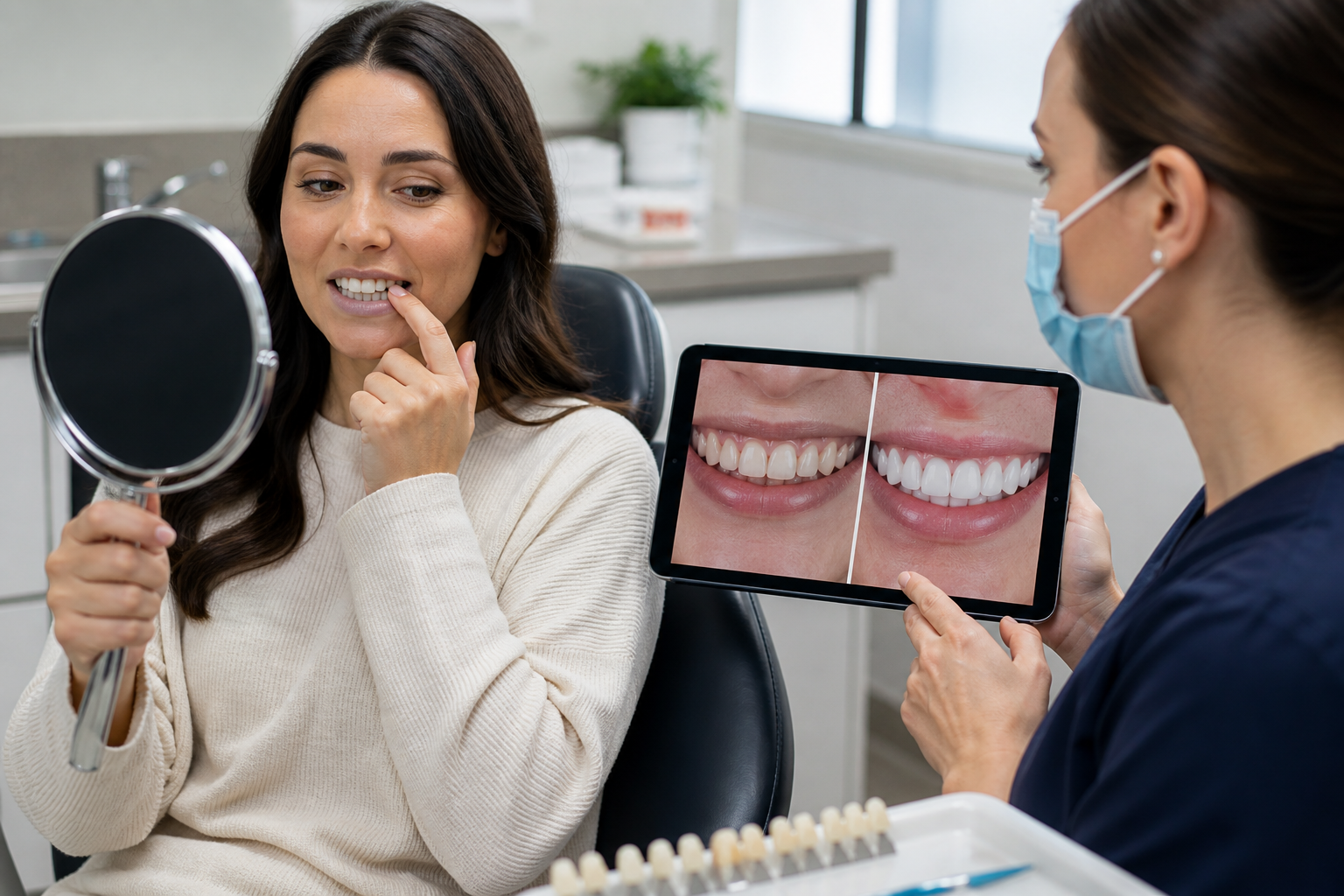
If you've been researching how much veneers cost, you've probably noticed the frustrating range of prices floating around online. Here's why that happens: veneers aren't a one-size-fits-all treatment. They're a customized plan built around your teeth, your goals, and your bite.
Two people can both get "porcelain veneers" and walk away with bills that differ by thousands of dollars. The difference? One person might need temporaries, gum contouring, multiple try-ins, or extra bite planning—especially if they grind their teeth at night.
The number of teeth you treat usually matters more than which clinic you choose. Most smiles don't need 10 to 12 veneers to look dramatically different. Many patients see stunning results with just 4 to 6 upper front teeth. Figuring out "how many teeth" early keeps your budget grounded and helps you avoid extras that don't match what you actually want.
The safest approach is refreshingly simple. Pick a likely material—something like IPS e.max lithium disilicate, feldspathic porcelain, or composite resin—then collect three written, itemized quotes. Each quote should name the lab (or explain any in-house fabrication), list exactly what's included, and spell out the remake and warranty terms. If a quote can't provide that clarity, it's not one you should trust.
We're covering all of this upfront because veneers can genuinely transform your smile when planned thoughtfully—but they can also become expensive and stressful when the planning falls short. Keep in mind that traditional veneers require removing some enamel, making them permanent. The rest of this guide walks through real cost ranges by type and material, what drives those numbers, and how to get clean, apples-to-apples estimates without spending weeks searching.
Because veneers are a custom treatment plan, you'll encounter wildly inconsistent prices online. What actually matters is moving from generic numbers to a realistic, comparable estimate for your specific situation.
Here's the single most important step you can take right now: Build a baseline estimate using a structured worksheet or template. When every quote you request uses the same inputs, you create an apples-to-apples reference that makes comparison straightforward.
From there, the process stays simple. Start by selecting your likely veneer type (porcelain, composite, or minimal-prep), the number of teeth you're considering (most people weigh 4 to 6 versus 8 to 10), your city or travel destination, and the add-ons you might realistically need—temporaries, gum work, sedation, or a nightguard. Then prepare a quote request with a consistent checklist so the scope is crystal clear. If you only ask about "price per tooth," you'll get quotes that conveniently leave out important line items. Finally, aim to collect three itemized quotes. Three is usually enough to reveal what's normal versus what's suspiciously missing.
Before you start requesting quotes, have these ready: a recent exam or treatment plan (ideally from the last 12 months), clear photos—front, smile, profile—and digital scans if you have them, plus your priorities spelled out in plain language. Think "most natural look," "minimal drilling," "best stain resistance," "I grind at night," or "financing matters."
As for timing? If you already have photos or scans, most patients can collect three comparable written estimates in 7 to 14 days. If you need fresh diagnostics first, plan on 2 to 4 weeks depending on scheduling and records transfer.
Across the United States, veneer pricing follows a predictable pattern. Porcelain typically commands a premium, composite tends to be more budget-friendly, and no-prep or minimal-prep options aren't automatically cheaper—and aren't appropriate for every smile.
Porcelain veneers generally run $900 to $2,500 per tooth, with many metropolitan mid-range cases landing around $1,400 to $2,000. Composite veneers usually cost $250 to $1,500 per tooth, commonly settling between $500 and $1,000 depending on the workflow and finish. No-prep or minimal-prep veneers range from $800 to $2,500 per tooth, often similar to porcelain because planning and lab work still drive much of the cost.
A "full set" typically refers to the most visible upper teeth when you smile—often 6 to 10 teeth, sometimes 12 or more for wider smiles. That's why totals climb fast even when a per-tooth price sounds manageable. For example, how much do 10 veneers cost? Even at mid-range porcelain pricing, you're looking at $14,000 to $20,000 before add-ons.
Why do these ranges vary so much? The biggest drivers include the dentist's experience, the lab tier (high-volume versus boutique cosmetic lab), planning complexity (mock-ups, try-ins, multiple shade checks), and whether your quote bundles add-ons like temporaries, gum contouring, sedation, or a nightguard.
When a clinic says "porcelain," they might be referring to very different ceramics. Here's how the most common materials typically break down:
How can you verify the cost numbers you see online? Trust estimates that clearly state the year, region, and what's included. Reliable benchmarks come from dental fee and insurance-claims datasets, published dental market studies, and lab fee schedules. Whenever you save numbers for comparison, note the date—prices shift with lab costs and local market conditions.
A structured baseline estimate won't replace a dentist's exam, but it helps you create a practical price range you can reuse across quote requests. The goal is consistency: every clinic should be quoting the same scope so you can compare fairly.
Enter the number of teeth you're considering (4 to 6 versus 8 to 10 changes everything), your preferred veneer material (porcelain, composite, or minimal-prep), your location (city or region), any travel plans (if you're comparing another city or country, include a travel budget line), and likely add-ons like temporaries, sedation, gum work, or a nightguard.
Your baseline estimate should include a price range, a checklist of what's commonly included, and a short list of probable exclusions you'll need to confirm—remakes, extra temporaries, nightguard, sedation, and rush lab fees.
Here's a copy-and-paste template for quote requests:
Baseline Veneer Estimate (for quote consistency)Date: [MM/DD/YYYY]Teeth: [e.g., 8 upper front teeth]Material: [e.g., IPS e.max lithium disilicate porcelain]Location: [City/Region or Destination]Goal: [e.g., natural shade, close gaps, correct chips]Included: consult + scans/impressions + planning + lab fabrication + bonding + 1 follow-upNOT included unless stated: temporaries, sedation, gum contouring, remakes/revisions, nightguardTarget budget range: $[low] to $[high]
Build a cautious buffer by testing your estimate with a lab-cost swing of ±10 to 15%. If that wider range would affect your decision, get extra clarity on lab tier, try-ins, and remake policies before putting down a deposit.
The "best" veneer is the one that matches your goals, your starting teeth, and how much maintenance you're comfortable with. Most choices come down to predictable tradeoffs in appearance, stain resistance, repairability, and longevity.
Porcelain is usually the most enamel-like and stain-resistant option. With proper care and favorable conditions, many porcelain veneers last 10 to 15 years or longer—though individual results vary based on oral habits, bite forces, and maintenance. It's a higher upfront investment, and if a porcelain veneer chips or fractures, repair often means replacement rather than a quick fix.
Composite costs less upfront and allows easier repairs or adjustments, but it's more prone to staining and chipping. Many composite veneers need a refresh or replacement in 3 to 7 years, though longevity depends heavily on material quality, technique, and individual factors like diet and grinding habits.
No-prep or minimal-prep preserves more enamel and works best for certain starting conditions and moderate changes—but it's not suitable for every smile and can look bulky if planned poorly. Not everyone qualifies.
If "most lifelike and longest-lasting" tops your priority list, start with porcelain quotes and ask about lab tier and shade/try-in steps. If "lower upfront cost and easy future tweaks" matters most, compare composite approaches and ask what maintenance looks like in years 1 through 5. If "preserve enamel or minimal drilling" is essential, ask whether you qualify for minimal-prep and what diagnostics are needed to confirm it safely.
Porcelain veneers cost more because you're paying for two things at once: clinical precision (prep, fit, bonding) and lab artistry (shape, translucency, shade layering).
Porcelain mimics natural enamel because of how it handles light—its translucency, subtle depth, and the way it reflects differently at the edge versus the body of the tooth. Achieving that "real tooth" effect often requires time-intensive lab steps: custom shading and characterization so veneers don't look flat or chalky, hand layering in feldspathic work or detailed ceramic finishing for pressed ceramics and lithium disilicate, and stains and glazes to control brightness, warmth, and micro-details before sealing with a final surface finish.
Porcelain also has different "failure math" than composite. Many chips or cracks can't be invisibly patched chairside, so the common scenario is replacing that single veneer rather than a quick repair. That's why you should plan for the future cost of one veneer, not just the full set.
Questions that protect you financially: Which ceramic is being used and why? Is there a try-in step before final cementation, and is it included? If one veneer fractures in year 7, what would replacement cost in today's dollars? Which lab fabricates them, and can you see recent cases from similar starting teeth?
Composite veneers are popular because they're more affordable upfront and easier to adjust over time. But "composite veneers" can mean different workflows. Chairside or direct composite is built and shaped by the dentist in one visit—fast and adjustable, but the finish and long-term stain resistance depend heavily on technique and polishing. Lab-supported composite or CAD/CAM workflows use digital design for consistency of shape and fit. Some clinics use 3D-printed or digitally fabricated shells, which can improve consistency and turnaround, though long-term performance data varies by the specific resin system, finishing protocol, and your individual bite forces.
The tradeoff is maintenance. Composite generally stains and chips more easily than porcelain, especially with frequent coffee, tea, red wine, smoking, or if you clench or grind. If you choose composite, ask what "maintenance" actually looks like in real life. Many patients do best with regular cleanings and occasional polishing to maintain shine, being proactive about small chips (fixing them early before they spread), and wearing a nightguard if you grind—this can mean the difference between a 3-year problem and a 7-year success.
Composite may work well if you want a lower-cost improvement now, prefer something easier to tweak later, or want a "trial run" smile before investing in porcelain.
No-prep and minimal-prep veneers preserve more natural tooth structure, especially enamel, which is ideal for bonding strength. Patients often ask how much non-invasive veneers cost compared to traditional options—and the answer may surprise them. These conservative choices aren't necessarily cheaper because planning complexity and lab work still drive much of the cost. More importantly, not everyone qualifies. The key question is whether your teeth and bite allow added material without creating bulk, gum irritation, or bite interference.
You may encounter brand names like Lumineers in this category. Treat brand claims as a starting point and still require scan-based planning, candidacy confirmation, and a written scope.
Dentists evaluate candidacy based on enamel availability and thickness (bonding to enamel is more predictable than bonding to dentin), tooth position and alignment (crowded or rotated teeth often need reshaping to avoid a bulky look), bite relationship and clearance (front-to-back bite, edge-to-edge bite, and grinding patterns all matter), and color goals (severe discoloration may require different materials or more prep for masking). Minimal-prep can be the middle path—a small amount of shaping improves thickness control, color results, and natural contours without aggressive drilling.
Follow-up care matters because margins and gum response are a big part of the final look. Ask what the clinic includes for post-placement bite refinement, gum health checks in the first weeks, and polishing or refinishing if edges feel rough or collect stain.
The diagnostics you should expect before anyone confidently recommends "no-prep" include intraoral photos and a bite evaluation, digital scans or high-quality impressions, and sometimes X-rays plus a planning mock-up (wax-up or digital design) to preview thickness and bite impact. If someone recommends no-prep without scan-based planning, getting a second opinion makes sense.
Veneers are a major purchase, so you need a consistent way to compare clinics and protect yourself from hidden costs. The SMILE framework is designed for exactly this purpose.
S = Scope: How many teeth, what's included, what's excluded, and the written timeline.
M = Material: The exact material and finishing details, plus shade and preview steps.
I = Investment: Total cost today, plus predictable future costs (repairs, replacements, guards).
L = Lab: Lab name, technician expertise, workflow, and quality control.
E = Exit: Warranty, remake rules, response times, and what "final" actually means.
Using SMILE forces clarity. And clarity reduces regret—"cheap veneers" become expensive when you're paying for revisions, emergency visits, or full remakes down the road.
Before comparing price, make sure the scope matches on paper. Your quote should specify how many teeth and which ones, diagnostics (photos, scans, X-rays), tooth preparation details (where and how much enamel reduction), temporaries and/or try-ins (included or not, and how many), the bonding and cementation visit plus bite adjustments, and follow-ups (how many visits, within what time window).
Confirm whether preparatory treatments are included or billed separately. Common examples include replacing old fillings, treating gum inflammation or periodontal disease, fixing cavities, root canal treatment, extractions, or bite therapy for heavy grinding. Pre-existing gum disease or active decay typically needs to be addressed before veneer placement.
One line of wording that prevents confusion: "Please include both (1) the per-tooth price and (2) the all-in total for [X] teeth, with a list of included and excluded items."
If you're traveling, ask for timeline milestones upfront: how many visits required, how many days between visits, and whether any rush lab fees apply if your schedule is tight.
Small material and finishing choices dramatically change how veneers look in real life. Vague terms like "porcelain" make it hard to compare durability, translucency, and repair expectations.
Aim for this level of detail in writing: "Lithium disilicate (IPS e.max), custom stain and glaze, natural translucency profile" or "Feldspathic porcelain, hand-layered for incisal translucency, high-gloss glaze" or "Composite veneer system, polished finish protocol, maintenance polishing recommended every X months."
If a natural, custom color is important, ask for a preview step before the lab finalizes: "Will I have a mock-up, wax-up, or try-in to approve shape and shade before final cementation? Please confirm whether that step is included in the quote."
Make sure your written estimate shows the total cash price, a per-tooth breakdown, and a clear list of exclusions. Common "surprise" costs include remakes or revisions, sedation, expedited lab shipping, extra temporaries, additional aftercare visits, and a nightguard.
If you're considering financing, don't compare by monthly payment alone. Require written details: plan name, APR, term length, fees, deferred-interest rules (if any), and the total cost over time.
Insurance rarely covers veneers because they're typically classified as cosmetic. In limited situations, ask the dentist to document whether any part could be considered medically necessary (trauma, severe erosion, developmental enamel defects). Request procedure codes and a written narrative, then verify with your insurer—ideally via pre-authorization or a written denial—before treatment. Even with documentation, approval is uncommon.
To understand lifecycle cost, ask: "If one veneer needs replacement in 5 to 10 years, what would that cost in your office, including the lab fee?"
Great veneers result from a strong dentist-lab partnership. Ask for the lab name (not just "our lab"), case photos from similar starting teeth (not stock images), turnaround time and what happens if shade is off at try-in, and quality control steps (fit checks, shade verification, remake process).
For larger cases (8 to 10+ veneers), it's reasonable to ask for recent case examples with brief notes or patient references and testimonials, following the clinic's privacy rules.
Watch out for red flags: unknown labs, vague lab pricing, or pricing far below local norms without a clear explanation of what's different.
Before you pay, get aftercare and warranty terms in writing. Confirm what's covered (debonding, fractures, shade mismatch) and how "defect" is defined, what's excluded (such as damage from grinding without a guard), how long coverage lasts, remake timelines (how fast they'll remake and re-seat), and who pays shipping if it's involved.
Also define what "finished" means: "Please confirm the point at which work is considered final (after try-in approval, after cementation, or after follow-up), and what adjustments are included before additional fees apply."
If traveling, add one more requirement: an emergency contact process and a clear plan for adjustments or remakes after you return home.
To compare quotes fairly, ask every clinic to present pricing in a simple table format. This approach exposes hidden costs instantly.
If you see "lab fee TBD," don't proceed without a firm written cap: "Please provide the lab name and a maximum lab fee (cap) in writing, and confirm whether any rush fees apply based on my timeline."
To convert quotes into a fair comparison, calculate your all-in total: per-tooth veneer fees × number of teeth, plus every included line item, plus every add-on you're likely to need (temporaries, nightguard, sedation, gum work), plus any travel costs.
Some parts of veneer pricing are fixed—materials and skilled lab work cost what they cost. But you still have meaningful control over the total without gambling on quality. The key is knowing where you have the most leverage.
Highest influence: tooth count, material choice, and whether you phase treatment. Medium influence: lab tier selection, bundling add-ons, and negotiating fee caps. Lower influence: regional pricing differences (unless you're willing to travel).
Number of teeth is your biggest lever. Many people don't need every visible tooth treated. Focusing on 4 to 6 upper "smile zone" teeth can still create a noticeable improvement and save thousands. Understanding how much multiple veneers cost matters because the jump from 6 to 10 teeth can add $4,000 to $10,000 depending on material choice.
Material choice matters too—composite usually lowers upfront cost, but be honest with yourself about staining, repairs, and earlier replacement compared to porcelain.
Phasing treatment helps spread the investment: some clinics can stage upper and lower arches, or start with a smaller upper set.
With lab tier, some practices offer standard versus master-ceramist options. The right move isn't "cheapest"—it's the tier that matches your expectations.
Finally, bundling and caps for nightguards, try-ins, follow-up visits, and rush fees are often negotiable if you ask before committing.
Here are some scripts that work without sounding pushy:
If your budget is tight, a common strategy is the "trial smile" approach: composite first, with a planned upgrade path to porcelain later—as long as you're comfortable with the maintenance realities and understand that transitioning to porcelain later will still require tooth preparation.
Dental travel to Mexico is popular because clinic fees can run significantly lower than in many U.S. cities. Depending on the clinic, materials, and scope, some patients see totals roughly 30 to 60% less. But the only comparison that matters is total trip-adjusted cost plus warranty practicality.
A simple break-even check: Calculate your "true per-tooth" cost with travel included. If you're doing 10 veneers and travel costs $1,200 total, that adds $120 per tooth. If the Mexico clinic charges $500 per tooth and a U.S. quote is $1,400, that looks like a win—until you account for possible return-trip risk. If a return trip would cost another $1,200, your travel-adjusted cost jumps to $240 per tooth in travel alone.
If you're considering Mexico, verify these details before booking: an itemized quote with scope and exclusions; written warranty with remake terms and timelines; named lab (or clear in-house details) and material specifics; provider license proof and clinic credential transparency; and a contingency plan for who pays if you need a remake and what local emergency care looks like once you're back in the U.S.
Clinics that frequently appear in patient research include Sani Dental Group (Los Algodones), Smile Builders (Tijuana), and Cancun Dental Specialists. These names are listed because they commonly appear in online searches—not because of any quality review or endorsement by the publisher. Verify credentials, materials, lab details, and written warranty terms yourself before booking.
A veneer quote is only useful if the boundaries are clear. Many plans include the basics but exclude items that become important once treatment starts—especially temporaries, try-ins, remakes, sedation, and nightguards.
When you see an item marked "included," ask one clarifying question: "Included up to what limit?" For example: Are temporaries included for every tooth, and does that include remaking one if it breaks? Is the try-in included, and what happens if you don't like the shade? How many adjustments are included after bonding, and for how long?
Watch for red flags: "Lab fee TBD" or "materials TBD" with no cap, no written remake policy, unclear temporary coverage, or promises of "no-prep for everyone" without scan-based planning and individual assessment.
If you need to turn a vague line item into a firm commitment, here's how that conversation might go:
You: "Your quote lists 'lab fee' but doesn't specify the lab or maximum amount. Can you provide the lab name and a capped lab fee in writing?"
Good answer: "We use [Lab Name]. The lab portion is $X per unit, included in the total, and we cover remakes due to lab defects within [timeframe]."
Poor answer: "Don't worry about it—we'll figure it out later."
You can often negotiate common extras without cutting quality: "Can we bundle the try-in and first follow-up into the total fee?" or "If rush lab fees apply, can we cap them and put the timeline in writing?"
For most patients, insurance won't cover veneers because they're considered cosmetic. Financing is often the bigger factor—and worth being strict about documentation.
For financing, get these details in writing: plan or lender name, APR (and whether it can change), term length in months, down payment required (if any), all fees (origination, processing, late fees), deferred interest rules (common with "0% if paid in full" promotions), and the total repayment amount over the full term.
A reality-check calculation: Financing $12,000 over 36 months looks very different at 0% versus 14% APR. Even without exact amortization math, insist on the lender's written "total of payments" so you're comparing the true cost, not just the monthly number.
Warning signs: unclear deferred-interest terms, "same-as-cash" promotions without a clear payoff deadline, or quotes that won't state the total repayment amount.
If medical necessity might apply: Ask your dentist for procedure codes and a short written rationale explaining why treatment is medically necessary (if relevant), then request pre-authorization from your insurer. If they deny, get the denial in writing before you proceed so you're not surprised later. Keep expectations realistic—even documented cases of trauma or developmental defects are frequently denied.
Dental care abroad: Compare pre-screened dental clinics in Mexico with GetGlobalCare - Dental Care Abroad to review options and quotes.
Most veneer cases follow a predictable clinical sequence, though the visit count varies by office and complexity.
You'll typically start with a consultation—an exam, photos, X-rays, and often digital scans. The dentist will assess your oral health and candidacy for veneers; any issues like gum disease, cavities, or significant grinding typically need to be addressed first. Next comes smile planning: a mock-up or wax-up, shade planning, and bite review. The prep visit involves tooth shaping (or none for true no-prep), scans or impressions, and temporaries if needed. Some cases include a try-in to confirm shape and color before final cementation. At the bonding visit, final veneers are placed with adhesive bonding and bite adjustment. Finally, a follow-up checks comfort, gum health, and allows small refinements.
Technology can change timelines. Intraoral scanners speed up impressions and improve lab communication. Some clinics use in-office milling for certain restorations, though many cosmetic cases still rely on specialized external labs for top aesthetics.
Smart questions to ask: Do you use digital scans, and will I receive copies? Is there a planned try-in or mock-up approval step? How many total visits, and how many days between them, written into the treatment plan?
If you're traveling for care, require the visit schedule in writing and ask what happens if a remake is needed—does it add days or require a second trip?
The upfront quote is only part of the story. The real question: What will this smile cost over 5 to 15 years, including maintenance and the realistic chance of repair or replacement?
A simple lifecycle cost estimate: 5–15-year ownership cost = upfront total + (annual maintenance budget × years) + expected repair/replacement cost.
To make "expected repair/replacement cost" practical, ask the clinic for two numbers in writing: what it costs to replace one veneer in the future, and what their warranty covers (and for how long, and what voids it). Then build a conservative scenario—if there's a reasonable chance you'll replace one veneer over 10 years (accidents happen, and individual factors like grinding or bite issues can affect longevity), include that price in your planning budget now.
Annual habits that affect durability: a nightguard (if recommended) helps reduce the risk of chipping and debonding for grinders and clenchers; regular cleanings keep margins healthy and reduce staining, especially for composite; polishing and maintenance visits are more common with composite—ask what the clinic recommends. Avoiding hard foods, not using teeth as tools, and limiting stain-causing foods and drinks also contribute to longevity.
Questions that reveal real risk: "How often do you see remakes, and what are the most common causes?" and "If the shade is off at try-in, what happens next and who pays?"
To reduce regret risk, prioritize a preview step (mock-up or try-in), named lab transparency, written warranty terms, and a plan you can phase if you're unsure about committing to a full set immediately.
Veneers are powerful, but they're not the only path to a better smile. Depending on your goals and starting point, alternatives may fit better—especially if you want more reversibility or less tooth reduction.
Bonding works well for small chips or gaps and is often more affordable. It's less durable and more stain-prone than porcelain, but easy to repair and doesn't require enamel removal in most cases.
Crowns are often the more appropriate choice when a tooth is weakened, heavily filled, cracked, or decayed. They're more invasive than veneers (requiring more tooth reduction) but sometimes the right call for structural reasons.
Orthodontics or aligners can correct crowding or alignment so you may need fewer veneers—or none at all. They're often the best conservative first step, particularly for younger patients or those primarily concerned with alignment rather than color or shape.
Pop-on veneers (also called snap-on or clip-on veneers) are removable cosmetic covers that fit over existing teeth. Some patients ask how much pop-on veneers cost, and prices typically range from $300 to $2,000 depending on customization. However, these are temporary cosmetic appliances—not permanent dental restorations—and they won't address underlying dental issues. They may work as a short-term solution for photos or events, but they're not comparable to bonded veneers in terms of fit, function, or longevity.
If your main priority is reversibility, start by asking whether bonding or aligners can get you most of the way there. If structural safety is your concern, ask whether a crown is more appropriate for any compromised tooth. Your dentist can help determine which approach—or combination—best fits your situation.
Portfolios help, but only if you know what you're looking at. When reviewing photos, ask for the treatment date and material used, the lab name (especially for porcelain full-set cases), confirmation that the patient consented to sharing, and a short summary of starting problems and what was done to fix them.
High-trust galleries include close-ups and side views, not only wide-smile shots. Be cautious if every photo uses identical lighting and angles that hide tooth edges, if the "before" and "after" look like different head positions or expressions (not comparable), or if there's no context—no mention of material, prep approach, or case goals.
The best question to ask: "Can you show me a case with starting teeth similar to mine and explain what you changed and why?"
A full set isn't all-or-nothing. Many patients see substantial improvement treating just 4 to 6 upper front teeth. The right choice depends on your budget, tolerance for irreversible prep, and how your specific smile and goals align with what veneers can achieve.
Use this quick "pros and cons card" in conversations:
If you're stuck between a partial and full set, request two options in writing: a 4 to 6 tooth plan and an 8 to 10 tooth plan, same material, same lab tier. Then compare impact and total cost cleanly.
Turning research into a confident decision comes down to execution—not more scrolling. Here's a simple plan you can complete in days, not months.
Step 1: Save a baseline estimate. Run your inputs (tooth count, material, location, likely extras), then save a screenshot or PDF so you can keep quotes consistent.
Step 2: Request three itemized quotes using the same assumptions every time, requiring the quote table format.
Step 3: Organize and score your options. Put all three quotes into one comparison sheet (even a simple spreadsheet) with columns for total cost, lab name, warranty length, remake terms, timeline, and exclusions. Many people add simple weights like: 40% quality/lab, 30% warranty/aftercare, 30% total cost.
Realistic timing: Days 1–2 for baseline estimate and collecting photos/records. Days 3–10 for requesting quotes (follow up once if needed). Days 10–14 for comparing quotes using SMILE and clarifying exclusions. Week 3+ for booking consults with your top 1–2 choices.
Pre-booking verification: Confirm the lab name, material in writing, warranty/remake policy, written visit schedule, and total cash price (plus financing terms if relevant).
Subject: Request for Detailed Veneer Quote (Itemized) Hi [Provider Name], I'm comparing options for [number] veneers. Baseline assumptions (for apples-to-apples quoting):Date: [MM/DD/YYYY]Teeth: [e.g., 8 upper front teeth]Material: [e.g., IPS e.max lithium disilicate / feldspathic porcelain / composite]Location: [City]Goals: [natural shade / close gaps / fix chips / minimal drilling] Please send an itemized quote that includes:1) Per-tooth price and all-in total for [number] teeth2) What's included vs. excluded (temporaries, try-in, sedation, gum work, nightguard, remakes)3) Lab name (and technician details if available)4) Warranty/remake policy in plain language (coverage, exclusions, timelines)5) Estimated timeline and number of visits Thank you,[Your Name]
Globalcare creates independent guides to help patients compare treatment options. Some clinics or partners may pay referral fees if you book through Globalcare links or coordination services. We don't accept payment for rankings or analysis, and referral relationships don't change our clinical-review standards.
If Mexico is on your shortlist, comparing verified clinics reduces the biggest risks: unclear pricing, unknown lab quality, and hard-to-enforce warranties. Verified networks also make it easier to get itemized quotes, see credentials, and communicate clearly—including bilingual support when available.
Globalcare is built for this decision stage: you can browse a curated network of dental clinics across Mexico, compare details side by side, and request multiple quotes without starting from scratch each time. To begin, explore clinics and request free quotes in the Globalcare app.
Regardless of where you book, your safest process stays the same: baseline estimate → three quotes → SMILE scoring → written warranty and timeline → decision.
Reviewed by a dental professionalDr. Monica Vasquez, DDSSmileWorks Dental Clinic, Houston, TXReview Date: March 18, 2025Clinical accuracy review and fact-checking of dental concepts; no financial interest in providers or products mentioned.
Get in touch to get started!
Our team of experts will ensure your all-on-4 dental implants journey is safe and easy. We're dedicated to guiding you to your new smile every step of the way!
ConnectConcierge Services

Trusted Dentists

Safe Locations

Concierge Services
Trusted Dentists
Safe Locations

Disclaimer: Dental Cost Estimation Calculator
This Dental Cost Estimation Calculator is designed to provide users with estimates of potential savings when seeking dental treatments abroad compared to the cost of similar procedures in the United States. However, please be aware of the following important information before using this tool:
1. Estimations Based on Publicly Available Data:
The estimates provided in this calculator are derived from publicly available data sources, including average procedure costs, exchange rates, and other relevant information. These figures may not reflect the exact costs of your specific treatment or location. Estimations include non-dynamic assumptions for travel and lodging costs that may not reflect the actual costs at the time of your research.
2. Quantitative Model Assumptions:
The calculations are based on assumptions and data inputs that may not account for all factors influencing dental treatment costs. Variations in individual treatment needs, dentist fees, and other variables can significantly affect the final expenses.
3. No Substitute for Professional Advice:
This tool is not a substitute for professional dental advice. Before making any decisions about your dental treatment, it is crucial to consult with a qualified dental professional who can provide you with a personalized assessment of your needs and potential costs.
4. Currency Exchange Rates:
Estimates involving foreign treatment costs rely on currency exchange rates, which can fluctuate. The rates used in this calculator may not accurately represent the current market rates at the time of your treatment.
5. Geographic and Facility Variations:
Dental costs can vary significantly based on geographic location, dental facility, and the complexity of the procedure. The estimates provided are general in nature and may not reflect the specific conditions in your chosen destination or dental clinic.
6. Non-Inclusive Costs:
This calculator may not account for additional expenses such as per diem costs in destination or unforeseen complications during or after the procedure. These costs can substantially impact your overall expenses.
7. Liability Waiver:
By using this calculator, you acknowledge that the estimates provided are for informational purposes only, and Globalcare Network Inc or any of its representatives bear no responsibility for the accuracy of the estimates or any decisions made based on them.
8. Independent Research Recommended:
It is strongly recommended that you conduct independent research, obtain quotes from dental professionals, and consider all relevant factors when making decisions about dental treatment abroad.
In summary, while this Dental Cost Estimation Calculator aims to provide helpful information, it should not be the sole basis for your decision-making process. Your individual circumstances and dental needs may differ, and it is essential to seek professional advice and conduct thorough research before pursuing dental treatment abroad

