Dental Veneers: What They Fix and What They Don't.
May 4, 2026

Back to Blog
.png)
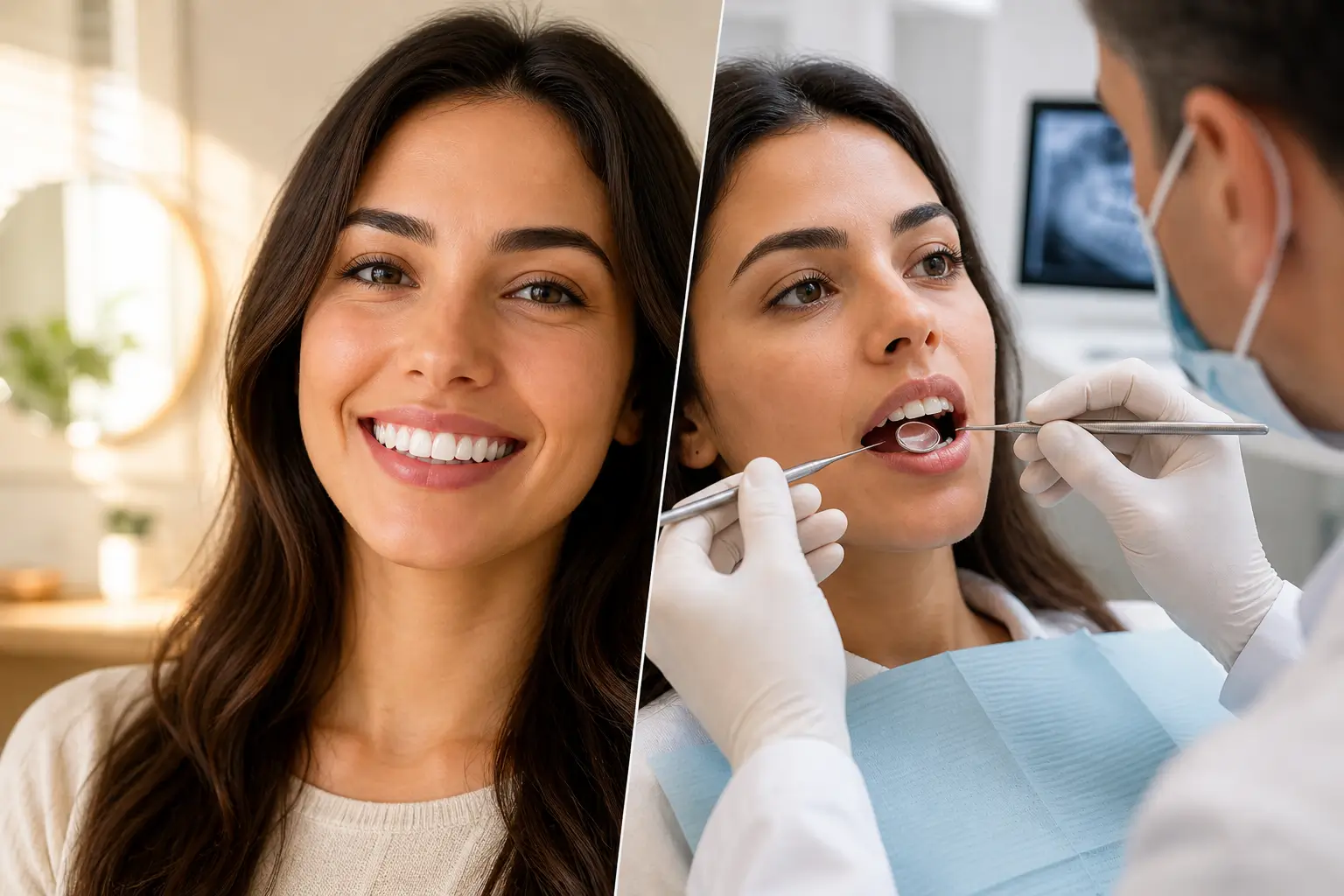
Think of this as the advice you'd want from a trusted friend who happens to know a lot about dentistry. Veneers can deliver stunning results—but only when they're matched to the right problems, placed on the right teeth, and supported by a solid plan.
First, understand that veneers solve specific cosmetic problems, not everything. They're ideal for masking deep stains, smoothing chips and worn edges, improving tooth shape, and closing small gaps. They're not designed for active decay, gum disease, significant bite problems, or teeth that need structural rebuilding. When the foundation is unstable, even gorgeous veneer work tends to fail sooner than it should.
The real trade-off with veneers is permanence. Most cases require enamel reduction—often minimal, but irreversible either way. You're not simply getting a new look; you're choosing a long-term restoration that will eventually need repairs or replacement. If you clench or grind your teeth, proper design and a night guard matter just as much as the material itself.
Your safety comes from documentation, not verbal promises. Before putting down a deposit, you should have verified clinician credentials (through the state dental board in the U.S. or the Cédula Profesional in Mexico), documented diagnostics (exam, X-rays, gum and bite notes), a preview (mock-up or try-in), a timestamped itemized quote, and a written aftercare and warranty plan. If you're traveling for treatment, don't treat the aftercare plan as optional—it's the difference between a manageable adjustment and an expensive second trip.
Veneers can deliver a uniform, bright, camera-ready smile in as few as two visits, though some cases need additional appointments. The trade-off is permanence: most cases require irreversible enamel reduction. People who feel best about their results long-term typically planned carefully, saw a preview, understood costs in writing, and knew exactly what would happen if something needed adjustment.
You might want a second opinion first if any of these situations apply to you. If you have pain, frequent sensitivity, or suspect a cracked tooth, your issue may not be purely cosmetic. If you've been told you clench or grind, or you've had repeated chips, veneers can still work—but planning and protection become critical. If you're considering treatment abroad but don't have a written plan for follow-ups, repairs, and warranty claims once you're back home, pause and get clarity. The same goes if you might want orthodontics later and aren't ready for a permanent change, or if you're under 18 and your teeth are still developing—waiting until development is complete typically leads to better, more stable outcomes.
On the other hand, veneers are often straightforward when your main goal is cosmetic—improving color, shape, small chips, or small gaps—and a recent exam confirms no untreated cavities or gum disease, with enough healthy enamel for bonding. You should also be able to realistically access follow-up care, either locally or through a documented plan if you're traveling.
Veneers often deliver the look people want. The bigger question is whether the long-term commitments fit your teeth, your habits, and your lifestyle. Understanding the risks and benefits of veneers helps you make a confident decision.
Consider the tension between appearance and tooth preservation. Veneers can camouflage multiple cosmetic issues quickly, but even "minimal-prep" versions usually require some enamel removal. If you're considering orthodontics later, or you're not sure about making a permanent change, it's worth exploring more conservative options first.
There's also a tension between speed and planning. Great veneer outcomes are designed, not rushed. Photos, scans, bite evaluation, and a mock-up or try-in help prevent results that look bulky, flat, or mismatched. If someone offers an "instant smile" without a real planning phase, ask yourself what steps they might be skipping.
Finally, consider lower upfront price versus continuity of care. Cross-border treatment can cost significantly less—estimates often range from 50–70% below U.S. prices, though savings vary by location and case complexity. But follow-up logistics matter. If a veneer chips or loosens after you're home, unclear warranty terms can quickly eat into those savings. That's why a written aftercare plan with defined response times is essential, especially when your provider is across a border.
For more detail on these trade-offs, see the step-by-step procedure, materials and longevity, and the CARE checklist.
The "per-tooth" price you see is only a starting point. Your real budget depends on the full package of care—and what happens if anything needs adjustment later.
When comparing clinics (whether local or abroad), look for these cost components in writing:
Think of any initial price as a rough estimate until you have a timestamped, itemized quote and a written aftercare plan. For help evaluating quotes, jump to Decoding Quotes and Avoiding Hidden Costs and the Pre-Booking Checklist.
Wherever you get treated, the safest veneer experiences share four documentation pillars: Credentials, Aftercare, Real cost, and Eligibility. Use this checklist to avoid irreversible mistakes and financial surprises before you put down a deposit.
You're not just buying veneers—you're trusting a specific dentist, clinic, and lab. Knowing exactly who's responsible creates accountability if something needs adjustment or a remake.
Request the following in writing: the treating dentist's full name and license number, the clinic's legal name and address, and the lab name and location fabricating your veneers.
To verify credentials in the U.S., check the state dental board (not the ADA). In Mexico, ask for the dentist's Cédula Profesional and verify through the Registro Nacional de Profesionistas. Cross-check reviews across multiple platforms, paying attention to how clinics handle follow-ups and remakes—not just before-and-after photos. If a clinic claims certifications, ask what that specifically means for your care.
Lab transparency matters too. If your veneers need a tweak or remake, you'll want clear traceability—what material was used, where it was made, and who can reproduce it.
A warranty that isn't written—and usable—isn't really a warranty. This matters even more if you'll be home when an issue surfaces.
Your aftercare and warranty documents should clearly state what's covered (debonding, chipping, fracture) and what's excluded (trauma, untreated grinding, poor hygiene, normal wear). They should specify coverage duration, claim deadlines, and the exact process for repairs or remakes. You need emergency contact information with expected response times, and confirmation of whether follow-up visits are included. If you traveled for treatment, there should be a plan for remote check-ins and coordinating local help if needed.
Vague language like "we'll take care of you" isn't enough. Strong documentation protects you—and helps the clinic set fair expectations.
A credible quote is more than a price—it's a plan. You should receive a comprehensive, timestamped, itemized estimate plus a treatment timeline with visit count and realistic lab turnaround times.
A complete estimate covers per-tooth fees, diagnostics, temporaries, lab charges, planned follow-ups, and "what if" fees (extra adjustments, remakes, rush work). If cross-border logistics are involved, clarify whether anything gets shipped and who pays if a remake is needed.
On the timeline side, you want clarity on how many appointments you'll need, how many nights to plan in town, what happens if the lab needs more time, and how a remake would affect your schedule.
Eligibility isn't a guess—it's a documented clinical decision. Before treatment begins, you should have written findings and a consent process that makes the long-term impact clear.
Ask for candidacy documentation: an exam summary, relevant X-rays, a gum assessment, bite notes, and confirmation that there's enough healthy enamel for bonding (or what alternative is recommended if not). Your consent should include acknowledgment that enamel reduction is permanent, the material being used, alternatives discussed (bonding, crowns, orthodontics, whitening), and the maintenance plan—including whether a night guard is recommended.
If a clinic dismisses these requests or won't put key points in writing, treat that as a serious warning sign.
Veneers work best on teeth that are fundamentally healthy but cosmetically disappointing. Understanding what veneers fix—and what they don't—helps you set realistic expectations. They're designed to address surface and shape concerns, not to fix underlying disease or unstable function.
Veneers excel when you want a predictable, even-looking result across multiple front teeth—especially when other cosmetic options won't reliably deliver.
Consider someone whose deep, long-standing discoloration barely budges with professional whitening. Porcelain veneers on the visible upper teeth create a brighter, consistent shade that doesn't depend on bleaching results. Or picture repeated small chips and uneven edges that need frequent touch-ups—veneers restore a smooth, uniform edge line and can break that cycle of constant cosmetic repairs (with proper bite protection).
Lifestyle and habits still matter. Heavy clenching, nail biting, chewing ice, inconsistent hygiene, and skipping cleanings can all shorten veneer lifespan, no matter how skilled the dentist.
If your main issue is disease, structural weakness, or bite instability, veneers may be the wrong tool—or the last step after foundational work is done.
Active gum disease or untreated decay needs to be treated first. Veneers shouldn't sit on top of unstable biology. Severe bite issues or significant crowding often call for orthodontics, which creates a more stable, tooth-preserving outcome. Large existing fillings, major cracks, or structurally compromised teeth may be safer with crowns or other restorative options. And if there's insufficient enamel for predictable bonding, your dentist may recommend a different restoration design to reduce debonding risk.
If any of these apply to you, consider a consultation with a restorative dentist, prosthodontist, or orthodontist—so the plan protects function, not just appearance.
Whether you're in Los Angeles or Los Algodones, a careful veneer process follows the same patient-first steps. Here's the flow you should expect—and the moments where asking clarifying questions makes a real difference.
Step 1: Diagnostics and planning. Your dentist conducts an exam, takes photos, evaluates your gums and bite, and captures X-rays. Many high-quality cases use digital scans plus a wax-up or mock-up so you can preview shape and proportions. This is the moment to ask: "What problems are we solving, and what records are you using to plan this?"
Step 2: Smile preview and design alignment. You should understand the planned tooth length, width, and brightness before anything permanent happens. Ask: "Can I see a mock-up or digital preview? Can we adjust it before prepping?"
Step 3: Preparation appointment. Enamel reduction is usually minimal but irreversible—commonly around 0.3–0.7 mm[2] depending on the case and material, though this varies by individual tooth anatomy and treatment goals. Impressions or scans are taken, and temporaries are made so you can test-drive speech, bite, and comfort. Ask: "How much enamel do you expect to remove? Will my temporaries reflect the final design?"
Step 4: Lab fabrication. A named lab fabricates the veneers. Many clinics use materials like lithium disilicate (often called e.max) or feldspathic porcelain, depending on design goals. Ask: "Which lab is making them? What material, and what's the turnaround time—including if a remake is needed?"
Step 5: Try-in and final placement. A true try-in lets you preview shade and shape before final bonding. Adjustments should happen before cementation whenever possible. After bonding, your bite is checked and you receive written aftercare guidance. Ask: "Will we do a try-in before final cementation? Can we adjust shade or shape at that stage?"
Step 6: Follow-up. A follow-up visit checks bite, gum response, and comfort. Some temporary sensitivity after placement is common and usually resolves within a few weeks. If you traveled, you should leave with a clear remote or local plan. Ask: "When is my follow-up? What's the plan if something feels off after I'm home?"
Red flags to watch for: skipping diagnostics, vague or missing temporaries, refusing to name the lab, pressure for same-day final bonding without a real try-in, or unclear aftercare instructions.
Before anything irreversible happens, you should have exam findings with relevant X-rays and bite notes, a gum assessment, photos and a mock-up or digital preview when available, a dated treatment plan listing which teeth and which material, and signed consent describing risks, alternatives, and the permanence of enamel removal.
Look for temporaries that reflect the planned final contours—not generic shells. There should be a real try-in for shade and fit approval before final bonding. Shade selection should happen intentionally with appropriate lighting. Lab name and material documentation should be available on request, and you should have clear expectations for lab timing. These commitments should be documented, not just mentioned in passing.
Material choice affects aesthetics, durability, repair options, and long-term cost. The best choice fits your clinical needs and habits—not just the marketing pitch.
Before you commit, ask for the material type and subtype (for example, lithium disilicate versus feldspathic porcelain, or which composite system), brand or lab documentation when available, expected pros and cons for your case (staining risk, chipping risk—especially if you grind), and the repair policy by material—whether that means a repair or a full remake.
The advantages of veneers made from porcelain include superior stain resistance, natural light reflection that mimics real enamel, and durability that often exceeds a decade with proper care. However, these benefits come with trade-offs: porcelain typically requires more enamel removal than composite and usually needs full replacement rather than repair if damaged.
Phrases to clarify: "repair vs. replacement," "polishing visits," "stain resistance," "recommended night guard," and "warranty coverage for chipping or debonding."
Most veneer failures aren't random—they're linked to bite forces, habits, and maintenance. Plan for veneers as long-term dental work that will likely need repairs or replacement at some point.
If you clench or grind, expect higher chipping risk without a night guard. Ask whether one is recommended and whether it's included in your treatment. Porcelain resists surface staining well, but composite can discolor faster with coffee, tea, red wine, or tobacco. The margins where veneers meet natural tooth can still accumulate stain over time regardless of material. Harsh brushing and abrasive toothpaste can contribute to gum recession and margin issues—ask your hygienist for veneer-safe guidance. Regular cleanings and bite checks help catch problems before a veneer fractures.
Budget realistically. Even well-done veneers aren't one-and-done. A smart plan includes maintenance now and a plan for future replacement.
Most veneer regret stories don't start with the veneers themselves—they start with unclear quotes and fuzzy follow-up responsibilities. A good quote is specific enough that you can predict the final bill and timeline.
Itemized quotes list each component separately—diagnostics, temporaries, per-tooth fee, lab, follow-ups. They're easier to compare across clinics and harder to surprise you later. Bundled quotes ("all-inclusive smile makeover") can be legitimate, but only if the clinic clearly defines what's included, what triggers added fees, and how remakes are handled.
If you see "all-inclusive," ask one simple question: "In what situations would I pay extra?" Then get the answer in writing.
Staged payments are common and reasonable—for example, a deposit for records, payment at prep, and final payment after placement or try-in approval. Some clinics offer financing partners; clarify interest rates, refund policies, and what happens if the treatment plan changes after diagnostics. When aftercare and remake terms are clearly written, everyone knows what happens if something needs to be redone—making it easier to agree on fair payment stages.
Veneers are usually considered cosmetic, so dental insurance typically won't cover them. However, diagnostics (exam and X-rays) and any medically necessary pre-treatment (like treating decay or gum disease) may be eligible for coverage. Ask the clinic for insurance-ready documentation and procedure codes where appropriate.
Watch for unnamed labs with unclear fees, no stated follow-up commitments, and "all-inclusive" language with no itemization or written remake policy. If the clinic clarifies anything verbally, ask them to add it to the written plan or send an email recap so you can compare accurately later.
Mexico quotes can offer excellent value—often estimated at 50–70% below U.S. prices, though actual savings vary by location and case complexity—but only if you verify logistics and aftercare the way you would for any permanent dental procedure. Ask these questions before committing:
Don't accept verbal-only warranties when travel is involved. If the answer is "we'll figure it out," pause and close that gap before you pay.
Look for "valid as of [date]" on every quote, and save the PDF or email thread. Ask what could change pricing: additional steps after diagnostics, lab upgrades, rush timelines, currency shifts, or extra adjustments. Compare like-for-like—if one quote includes temporaries and follow-ups and another doesn't, the "cheapest" option may not actually be cheapest.
Mexico is a major destination for cosmetic dentistry, and for good reason—skilled dentists, modern facilities, and prices that can be substantially lower than the U.S. Great outcomes are absolutely possible. But verification, logistics, and communication matter more when your provider is across a border.
Lab location and turnaround: Onsite or local labs can speed up timelines. Remote labs can add delays, especially if a remake is required. Get the lab's name and location in writing, and confirm what a remake would do to your travel schedule.
Regulatory reality: You may hear clinics reference COFEPRIS (Mexico's health regulatory authority). Regardless, your most practical safety steps are verifying the dentist's Cédula Profesional, confirming the clinic is a legitimate traceable business, and ensuring you receive proper documentation—exam notes, consent, warranty.
Bilingual communication: Veneers are permanent. You want informed consent, warranty terms, and aftercare instructions in a language you fully understand. If there's any language barrier, request bilingual documents to avoid misunderstandings about exclusions, timelines, and what "covered" actually means.
Aftercare norms: Some clinics excel at remote follow-ups; others assume you'll return in person. Don't leave without a written plan for bite adjustments, emergencies, and remake timelines—plus direct contact methods beyond a single messaging app.
Use this to compare dental clinics in Mexico consistently. If a clinic can't or won't fill it out, that's a signal to ask more questions before committing.
Your best option balances appearance, tooth preservation, longevity, and function. Veneers are powerful, but they're not always the most conservative choice. Compared to alternatives, they offer a predictable way to address multiple cosmetic concerns simultaneously—color, shape, minor chips, and small gaps—in just a few appointments.
If the problem is color, start with whitening when appropriate. Choose veneers when stains are intrinsic and stubborn, or when you also need shape changes. If the problem is position, orthodontics (braces or aligners) is usually the tooth-preserving solution for meaningful misalignment. If the problem is structural strength, crowns or onlays may be safer than veneers when a tooth is heavily filled, cracked, or structurally compromised.
If you're unsure, ask your dentist for a "least invasive first" plan and compare it to a veneer plan—including cost, longevity, and how each choice affects future options. You can also compare dental clinics in Mexico by procedure, location, and price.
The biggest risk is the permanent change to your natural tooth structure. Other problems usually stem from rushed planning, poor bite management, or unclear follow-up access—not from veneers as a concept.
Irreversible enamel removal: Most cases require some prep. No-prep or minimal-prep veneers exist but aren't appropriate for every smile—and even these may still involve some tooth modification.
Fit, bite, or shade issues: Mock-ups, temporaries, and try-ins are how good clinics catch problems before you're locked in.
Chipping or debonding: Risk increases with clenching, grinding, or bite imbalance—often manageable with proper design and a night guard.
Sensitivity: Some patients experience temporary sensitivity to temperature after placement, which typically improves over several weeks.
Financial and travel risk: If aftercare isn't planned, small issues can become expensive and time-consuming.
Stage the work: Consider starting with 2–4 veneers (or one arch) before committing to a full set.
Use temporaries intentionally: Wear them long enough to evaluate speech, comfort, and bite—not just for a few hours.
Get a second opinion when stakes are high: Especially if you have wear, gum recession, or a complex bite.
Have a local contingency: If traveling, identify a local dentist who can see you for urgent evaluation if something feels wrong.
Look for written acknowledgment of irreversible enamel change, alternatives discussed, material choice documented, and the expected follow-up schedule. You should also have a complication response plan: who you contact, expected response timeframe, what counts as an emergency, and the steps for repair or remake. Finally, clarify financial responsibility—what the clinic covers versus what you cover, including whether travel costs are ever covered (usually not, but you want it stated).
Secure these commitments before you submit a deposit, so you're not negotiating after your teeth are already prepped.
Before booking or putting down a deposit, follow this order of operations. It ensures you're making a permanent decision based on documents, not assumptions.
Sample request message: "Can you please email me my written exam summary (including X-rays if available), a detailed dated quote, and your warranty/aftercare policy (including the lab name and claim instructions)?"
Comparing multiple options—especially across borders—takes organization. Whether you use a spreadsheet or a dedicated tool, the goal is the same: keep quotes, credentials, material details, and warranty terms in one place so you can compare apples to apples.
The Globalcare app is designed for exactly this research stage. It helps you compare pre-screened clinics in Mexico side by side, with transparent pricing and quality details—so you can pressure-test cost, credentials, and aftercare before booking travel. Inside the app, you can filter clinics by treatment type and location, request multiple quotes and keep responses organized, review clinic credentials and documentation in one place, and message clinics directly to clarify timelines, materials, and warranty terms.
Many patients traveling to Mexico for veneers find that cities like Cancún offer an appealing combination: quality cosmetic dentistry at a fraction of U.S. prices, plus a comfortable recovery setting. Unlike border-town day trips, a destination like Cancún gives you time to heal, attend follow-up appointments, and return home with clear documentation—without rushing. Globalcare helps you find vetted clinics in these destinations, with transparent packages and warranty terms clearly defined upfront.
Create one folder per clinic and save PDFs or screenshots with dates. A simple naming convention makes comparison and future reference easier:
Add a one-page cover sheet listing what you have and what's missing. This helps if you get a second opinion or coordinate follow-up at home.
Last updated: 2026-05-04.
This guide draws on commonly accepted clinical standards in restorative and prosthetic dentistry, public-facing patient education from reputable dental organizations, and long-term survival findings frequently reported in peer-reviewed literature.
Sources include American Dental Association (ADA) patient education resources, peer-reviewed prosthodontic research (commonly published in JADA and the Journal of Prosthetic Dentistry), U.S. dentist license verification via state dental boards, and Mexico professional license verification via the Registro Nacional de Profesionistas.
How updates work: Dentistry, materials, and pricing norms can change. If something appears outdated, use current information from official license registries and your treating dentist's written treatment plan as your primary reference.
This article is educational and does not replace an in-person evaluation by a licensed dentist. Individual results vary based on oral health, habits, and other personal factors.
Veneers can be an excellent, confidence-boosting investment when they're planned carefully and supported with real documentation. If you take one thing from this guide, let it be this: don't hand over a deposit until you have the key details in writing—credentials, diagnostics, preview, quote, timeline, warranty, and aftercare. With the right process, you can move forward with clarity, whether your dentist is two blocks away or across a border.
Get in touch to get started!
Our team of experts will ensure your all-on-4 dental implants journey is safe and easy. We're dedicated to guiding you to your new smile every step of the way!
ConnectConcierge Services

Trusted Dentists

Safe Locations

Concierge Services
Trusted Dentists
Safe Locations

Disclaimer: Dental Cost Estimation Calculator
This Dental Cost Estimation Calculator is designed to provide users with estimates of potential savings when seeking dental treatments abroad compared to the cost of similar procedures in the United States. However, please be aware of the following important information before using this tool:
1. Estimations Based on Publicly Available Data:
The estimates provided in this calculator are derived from publicly available data sources, including average procedure costs, exchange rates, and other relevant information. These figures may not reflect the exact costs of your specific treatment or location. Estimations include non-dynamic assumptions for travel and lodging costs that may not reflect the actual costs at the time of your research.
2. Quantitative Model Assumptions:
The calculations are based on assumptions and data inputs that may not account for all factors influencing dental treatment costs. Variations in individual treatment needs, dentist fees, and other variables can significantly affect the final expenses.
3. No Substitute for Professional Advice:
This tool is not a substitute for professional dental advice. Before making any decisions about your dental treatment, it is crucial to consult with a qualified dental professional who can provide you with a personalized assessment of your needs and potential costs.
4. Currency Exchange Rates:
Estimates involving foreign treatment costs rely on currency exchange rates, which can fluctuate. The rates used in this calculator may not accurately represent the current market rates at the time of your treatment.
5. Geographic and Facility Variations:
Dental costs can vary significantly based on geographic location, dental facility, and the complexity of the procedure. The estimates provided are general in nature and may not reflect the specific conditions in your chosen destination or dental clinic.
6. Non-Inclusive Costs:
This calculator may not account for additional expenses such as per diem costs in destination or unforeseen complications during or after the procedure. These costs can substantially impact your overall expenses.
7. Liability Waiver:
By using this calculator, you acknowledge that the estimates provided are for informational purposes only, and Globalcare Network Inc or any of its representatives bear no responsibility for the accuracy of the estimates or any decisions made based on them.
8. Independent Research Recommended:
It is strongly recommended that you conduct independent research, obtain quotes from dental professionals, and consider all relevant factors when making decisions about dental treatment abroad.
In summary, while this Dental Cost Estimation Calculator aims to provide helpful information, it should not be the sole basis for your decision-making process. Your individual circumstances and dental needs may differ, and it is essential to seek professional advice and conduct thorough research before pursuing dental treatment abroad

