How Much Does a Root Canal Cost With Insurance? (Blue Cross, Guardian, and More)
February 13, 2026

Back to Blog
.png)
February 13, 2026
Back to Blog
When people say, "I have Blue Cross" or "I have Guardian," they're hoping for a simple number. Unfortunately, dental billing doesn't work that way. The good news? You can make costs predictable—once you understand three things.
First, your insurer's name doesn't set your price. Blue Cross Blue Shield plans differ by state and employer. Guardian plans vary by tier. Delta Dental might be a PPO or a DHMO—which changes everything about provider choice and pricing. Two people with Cigna can pay completely different amounts because their allowed amounts, network rules, deductibles, and annual maximums aren't the same. That's why the question "how much do root canals cost with insurance?" never has a single answer.
Second, "a root canal" is almost never the full bill. The procedure itself is just one line item. Your actual total typically includes an exam, imaging, the root canal, then a build-up and crown later (especially for molars, where crowns protect the weakened tooth). Insurance usually covers each piece at different rates. This is exactly where surprise charges come from—not because anyone's trying to deceive you, but because the quote you got only covered what's happening today.
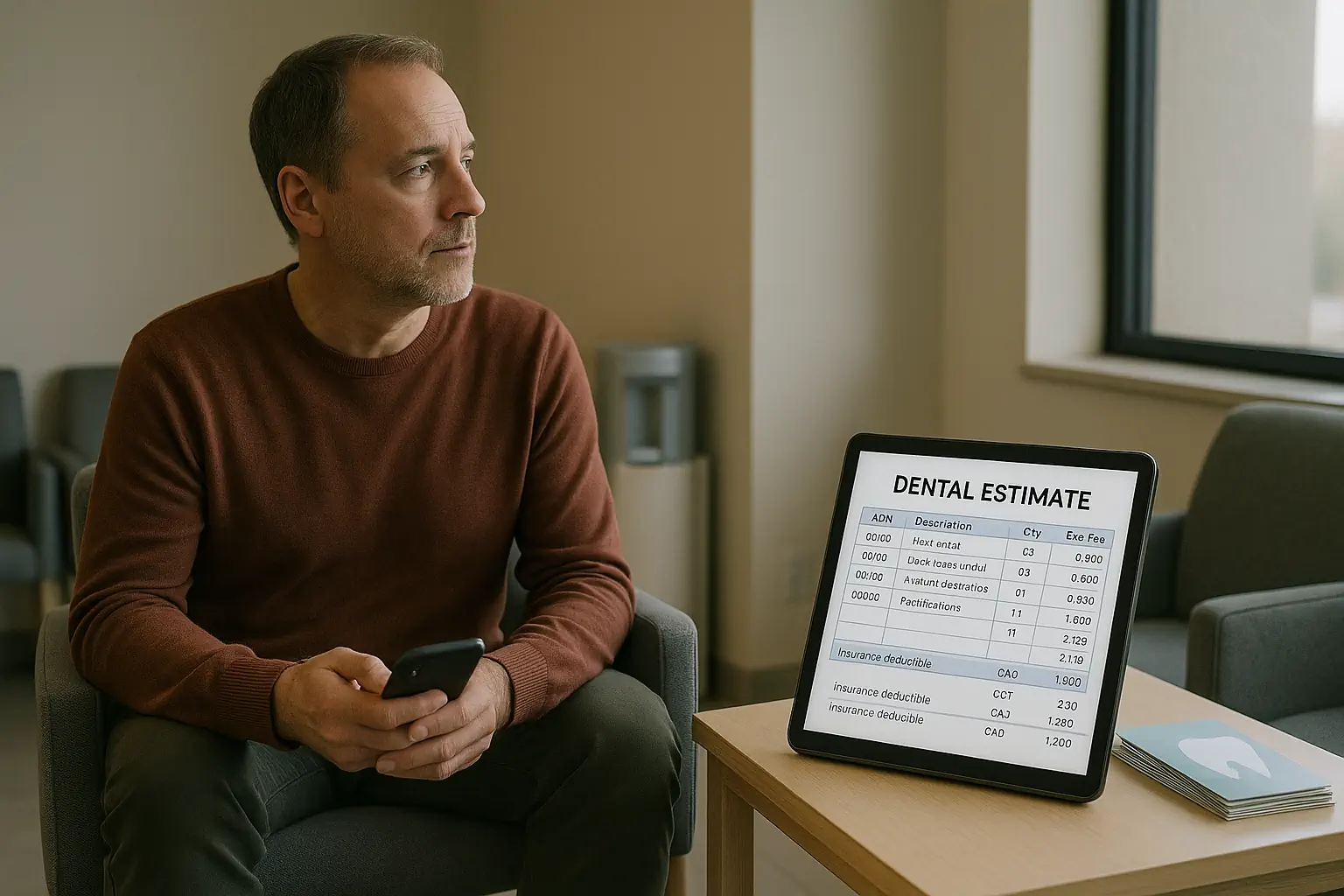
Third, two written documents can prevent most surprises. Get a dated, itemized estimate with ADA codes from your dental office. Then get a written predetermination from your insurer listing expected payments for each code. When those two documents match up, you can compare dental offices confidently—whether you stay local, go out of network, or even consider treatment abroad.
A root canal is rarely just one charge. Most treatment plans bundle an exam, imaging, the root canal itself, and typically a build-up and crown afterward (especially for back teeth). Each component gets priced and covered differently, so getting accurate numbers means pinning down all of them upfront.
The best time to confirm pricing is before you commit to any office. Your goal: get the clinic and insurer on the same page about the exact same services, quickly enough that you still have options if the numbers don't work. Ideally, give yourself 48 to 72 hours to request the clinic estimate and insurance predetermination simultaneously, then see which offices can document everything clearly within that window. If you're in pain and need treatment sooner, these steps still reduce your risk of surprise bills—just compress the timeline and prioritize the most critical questions.
Start by asking the dental office for a dated, itemized estimate with ADA codes. Common root canal codes include D3310 (front tooth), D3320 (premolar), and D3330 (molar). Crowns are billed separately—D2740 is a common all-ceramic crown code, though codes vary by material. Make sure the estimate covers everything that applies: exam, X-rays or CBCT scan, anesthesia or sedation, the root canal, temporary restoration, core build-up, post, crown, lab fees, and how many visits you should expect.
Next, request a written predetermination from your insurer using those exact codes. This document should spell out your remaining deductible, your coinsurance percentage, any exclusions or limitations, how much of your annual maximum you've used, in-network versus out-of-network rules, and the plan's estimated payment for each code.
Don't forget to confirm the timeline for the crown (and any build-up or post) and clarify who bills what. Many surprises happen because the root canal gets quoted now while the crown gets billed later—sometimes by a different provider entirely. Also ask about paperwork: Will they give you a superbill or itemized invoice with codes after treatment? You'll need this for out-of-network claims or if you're considering care abroad.
Scripts you can copy and paste:
Email to the dental office:
"Please send a dated, itemized estimate with all ADA codes for the root canal, crown (if needed), imaging (X-rays or CBCT), build-up or post (if applicable), and any lab fees. Please confirm you can provide a superbill or claim form after the procedure, and include the expected timeline for crown placement and final billing."
Message to your insurer (call or portal):
"I'd like a written predetermination for ADA codes [insert codes] from provider [clinic name], including deductible remaining, coinsurance, annual maximum status, network status, and estimated plan payment by code."
For clean comparisons, you want three things in writing within that 48- to 72-hour window: a dated, line-by-line estimate with all ADA codes (including crown and lab details if recommended), written confirmation they'll provide a superbill or claim documentation after treatment, and a visit and billing schedule showing what happens now versus later. If an office won't provide an itemized estimate or superbill, treat that as a red flag—especially when you're shopping around.
The tooth being treated drives both complexity and cost. Your root canal treatment cost depends significantly on tooth location: front teeth typically have one canal, making them faster and less expensive. Molars often have three or more canals, take longer, and almost always need a crown afterward to protect what's left of the tooth.
*These ranges are broad because your deductible, annual maximum, in-network status, and insurance plan rules can shift the number significantly. Many patients focus on the root canal fee and then get blindsided by the crown and build-up later.
There's no universal insured price—even within the same company. What matters is your specific plan design, your annual maximum status, and whether your dentist is in-network.
Still, it helps to see how major insurers generally shake out for a common high-cost scenario: a U.S. molar root canal (procedure only). Use the table below as a baseline for planning your average cost of root canal with insurance, then confirm everything with a predetermination.
*Ranges assume typical U.S. pricing and common plan designs. Your actual cost depends on your plan's allowed fee, deductible and coinsurance, annual maximum, tooth type, and whether additional services (crown, build-up, post, imaging) are needed.
Here's the mindset shift that saves money: "covered" doesn't mean "cheap." Whether you're looking at root canal cost with insurance Blue Cross Blue Shield, root canal cost with Guardian insurance, or any other carrier, what actually determines your bill is the allowed amount and how your plan applies deductible, coinsurance, and annual maximum to each ADA code.
For some patients—especially those who are uninsured, have maxed out their benefits, or are staring at a large out-of-network balance—Mexico can meaningfully lower costs. Quality varies by clinic there just like it does in the U.S., so the key is treating it like any high-stakes purchase. You're not just buying a procedure; you're buying the plan, the documentation, and the aftercare.
According to dental tourism platforms like Dental Departures and Patients Beyond Borders, an all-in root canal plus crown package in Mexico typically runs around $350 to $700 USD, depending on city, clinic, and materials. Your real net cost should also factor in travel expenses, time off work, and how you'll handle follow-up (or complications) once you're back home.
Mexico tends to make the most financial sense when you're uninsured and local quotes are sky-high—as long as you can verify credentials, materials, and aftercare planning in writing. It also works well when you're facing a big coverage gap from a high deductible, a nearly depleted annual maximum, or out-of-network balance billing—and you can get transparent, itemized pricing abroad.
Before booking, ask the hard questions: What happens if you need retreatment, a crown adjustment, or post-op support? How will documentation be provided (itemized invoice, provider details, procedure codes)? Without solid paperwork and an aftercare plan, savings can evaporate quickly if complications arise.
One practical way to reduce risk is choosing from a verified network rather than starting from scratch. The Globalcare app helps you compare pre-screened clinics across Mexico with transparent pricing, bilingual support, verified reviews, and clear treatment plans. You can request multiple quotes based on the same treatment plan before committing.
Price shopping only works when you're comparing the same services under the same rules. The PRICE checklist is your pre-booking safety net—it aligns what the clinic plans to do with what your insurance will actually pay, and forces clarity on the two things that create most surprise bills: missing line items and unclear follow-up.
The single most helpful insurance step is getting a written predetermination that references your exact ADA codes and specific provider. It's the closest thing to a preview of what your insurer expects to pay.
Why does this matter so much? Your deductible status, coinsurance, annual maximum, and network rules can shift your out-of-pocket cost by hundreds of dollars—even when the root canal procedure is "covered." For out-of-network care, many plans pay based on an allowed amount or UCR (usual, customary, and reasonable) figure, not what the dentist actually bills. That gap can leave you with a much larger balance than you expected.
A trustworthy estimate is specific and time-stamped. It should list every expected component—not just "root canal" as a single lump sum. Missing line items are the number one reason a quote feels affordable while the final bill doesn't.
At minimum, your estimate should address: exam, imaging (X-rays and any CBCT), root canal fee, anesthesia or sedation (if any), temporary restoration, core build-up, post (if needed), crown type or material code, lab fees, and planned follow-up visits. If a crown is recommended, it should be clearly shown as separate (or explicitly bundled), with timing for when it gets billed.
Once you have both the estimate and the predetermination, match them line by line. If the codes don't match, the numbers won't either.
Clinical quality is part of your financial plan. While root canals have generally high success rates (studies report approximately 85–97%[3] depending on the tooth and clinical circumstances), a root canal that fails can lead to retreatment, surgery, or extraction—multiplying your costs many times over.
Confirm who's actually performing the procedure (general dentist versus endodontist), their licensing and credentials, and whether the clinic has experience with cases like yours—especially molars or previously treated teeth. It's reasonable to ask what technology they use (operating microscope use is common in endodontics) and how they handle complications.
Root canals are typically done in one visit[4], with additional appointments for the build-up and crown. Your plan should clearly state the visit sequence, who places the crown, and the expected timeline.
If you're traveling for treatment, this becomes non-negotiable. You need to know what happens if you experience pain, swelling, a broken temporary filling, or the crown needs adjustment after you're home. Ask who you'd contact, what's covered, what isn't, and whether the clinic will coordinate with a local dentist if needed.
Before treatment, confirm exactly what paperwork you'll receive and when: an itemized invoice and/or superbill with procedure codes, tooth numbers, provider identifiers, dates of service, and amounts paid.
If you're submitting to insurance (especially out of network or out of country), ask what documentation they provide for claims and whether they've helped patients do this before. For care abroad, also confirm accepted payment methods and any potential card, bank, or currency exchange fees so your net-cost estimate stays realistic.
Instead of trying to decode every insurance term at once, use one straightforward calculation:
Your net cost = Total (dated, itemized clinic estimate) − Insurer's estimated payment (predetermination) + expected follow-up, aftercare, and travel costs
If you're comparing local care versus traveling (domestically or to Mexico), add a simple break-even check: A travel option may be worth it when (Local net cost) − (Travel net cost) ≥ (your hassle and risk buffer). Most people set that buffer implicitly. A practical rule of thumb: if travel doesn't save you roughly 30–40% after travel and follow-up costs, many people decide local continuity is worth it.
When reimbursement is uncertain: If you're going out of network or abroad, treat insurance reimbursement as a possible bonus unless your insurer confirms eligibility and documentation requirements in writing. Run two versions of your calculation: a conservative estimate assuming reimbursement is $0, and an optimistic one assuming partial reimbursement based on the insurer's allowed amount.
Want to keep costs under control? Focus on the line items and decisions that most commonly change your total—and the long-term risk of needing more work later.
You don't need fancy software—just a consistent way to translate your documents into a net cost. A simple spreadsheet works: create rows for each ADA code[8] and columns for clinic fee, allowed amount (if provided), insurer estimate, and your share.
To avoid false confidence, run three versions: a best case where the crown isn't needed (or planned for later), no post, no CBCT, and the deductible is already met; a typical scenario with root canal plus build-up plus crown, standard imaging, and some deductible remaining; and a worst case with crown plus post plus CBCT, specialist fee, annual maximum nearly used, and out-of-network balance billing.
How to interpret your results: If your net cost keeps landing 15–25% higher than the original quote, something major wasn't included—usually the crown[28], build-up, post, imaging, or lab fees. That's your signal to pause and request a corrected estimate or updated predetermination.
Pricing varies widely by region—even by neighborhood. You don't need perfect data, just enough to know when your quote is unusually high or unusually low.
Some real-world examples for molar root canals (procedure only): Los Angeles, CA often runs $1,400–$1,800; Dallas, TX typically $1,000–$1,300; Milwaukee, WI often $950–$1,200. Common drivers of regional variation include local overhead (rent, labor), competition levels, specialist availability, and how aggressive insurers' negotiated fee schedules are in that area.
If a tooth can be saved and has a good prognosis, a root canal plus crown is often the most cost-effective way to keep your natural tooth. When the tooth can't be saved—or your dentist believes the prognosis is poor—extraction and implant may be a better long-term investment, though it's typically more expensive and takes longer. This decision should be made with your dentist based on your specific clinical situation.
*Insurance coverage for dental implants varies widely. Some plans exclude implants entirely or cover them at a lower percentage. Always verify benefits before deciding based on price.
When your dentist may recommend an implant instead: repeated infections, cracks extending below the gumline, severe bone loss, or a tooth with a poor long-term prognosis even after endodontic treatment. Your dentist can help you weigh the clinical factors alongside cost.
Plan for maintenance: Crowns can need replacement over time. Implants also require ongoing hygiene and can have maintenance and repair costs. The least expensive option today isn't always the least expensive over 10–15 years.
You can't negotiate the medical need, but you can often reduce waste, avoid duplicate work, and improve pricing.
Use timing strategically. If you're close to meeting your deductible, finishing treatment in the same plan year can lower your net cost. Conversely, if your annual maximum is almost depleted, ask whether placing the crown early next plan year changes the math.
Ask about pricing options. Some offices offer flexibility on lab fees, a prompt-pay discount, or a discount for paying the crown portion in full at scheduling. Bundled pricing for root canal and crown—when purchased as a package—can sometimes save 10–30%, though not all offices negotiate. Ask rather than assume.
Request the insurance-like rate. If you're paying cash, some offices will offer a fee-schedule rate similar to what they accept from insurance plans.
Consider dental schools. Supervised care at accredited dental schools can cost less for appropriate cases, though appointments may take longer, wait times can stretch to weeks or months, and complex cases may be referred to faculty or outside specialists.
Choose financing carefully. Promotional financing can help with cash flow, but deferred-interest offers can become expensive if you miss the payoff window. Compare the true APR and fees before committing.
Ask about retreatment policies. Some clinics offer policies that cover rework within a certain timeframe at reduced or no cost. It won't eliminate risk, but it can soften the financial blow if something doesn't heal properly.
Also check whether you can use an HSA or FSA. Root canals and crowns are typically eligible expenses—keep the itemized invoice.
A good estimate makes it easy to see exactly what you're paying for and when. A vague estimate makes it easy for costs to appear later.
Watch for these red flags: grouped wording like "restorative services" or "misc. fees" with no ADA codes; no crown details (material, code, lab fees, billing timing); no build-up or post line item for a structurally compromised tooth; "TBD" next to anything that could change the price materially; no clarity on who provides follow-up care or whether follow-ups are billed separately.
Questions that uncover missing details: "Can you provide a dated, line-by-line estimate listing each ADA code, each fee, the crown material, and lab fees?" "How many visits should I expect, and at which visit is each item billed?" "Can you show me a sample superbill or invoice format you provide after treatment?"
If the office won't put numbers in writing—or the number changes every time you ask—get another quote before proceeding.
If you're close to booking, these are the go/no-go checks that keep you from walking into preventable costs.
When to pause: if the crown isn't clearly priced, there's no promised superbill, or the insurer predetermination and clinic estimate don't match. As a practical trigger, if your numbers differ by more than $150–$300 (roughly 15–25%) without a clear explanation, stop and reconcile the codes and line items first.
What to do if something doesn't line up: Request a revised estimate from the clinic, ask the insurer to re-run the predetermination with corrected codes, and escalate to a supervisor if you can't get a written answer. If you're comparing options, get a second estimate. Clarity usually improves fast when there's competition.
Your best estimate combines two written documents: Dated clinic estimate − insurer predetermination + expected aftercare costs. Don't book—or travel—until the clinic estimate and insurer predetermination align on codes and expected services, especially anything related to the crown.
Some plans may reimburse out-of-country care, but don't assume yours does. If you're considering treatment abroad, confirm in writing: whether international dental claims are eligible, whether you need pre-approval or predetermination, exactly what documentation is required (codes, itemized invoice, provider details), and how reimbursement is calculated (many plans pay based on allowed amount, not the full bill).
If you can't verify these items, plan financially as if coverage will be $0—treat any reimbursement as a bonus.
Usually not. Most clinics price the root canal and crown separately, and many insurance plans apply different coverage levels to each. The cost for root canal and crown with insurance depends on getting written confirmation of what's included, the crown material, lab fees, and when each part will be billed.
You still have options—the most effective approach is creating competition and requesting clarity. Get a detailed, itemized written quote with ADA codes, then ask about cash discounts (some offices offer 10–30%). Compare bundled root canal and crown packages. Check dental schools or community clinics for lower costs (often with longer waits and scheduling constraints). Use HSA or FSA if eligible and keep itemized invoices. Consider financing only after reviewing APR, fees, and promotional-interest rules.
Yes. Many insurers allow—and some effectively expect—a pre-treatment estimate for major work. Use this approach: "Please send a written predetermination for all procedure codes for my planned root canal (and crown, if applicable), including the estimated insurer payment and my deductible and coinsurance details. Please confirm receipt and provide a reference number."
Keep a written record of dates, representative names, and reference numbers. If there's a dispute later, documentation matters.
Don't chase the lowest advertised number—chase the most complete plan. Get the dated, itemized estimate with ADA codes. Get the written predetermination. Make sure the crown and build-up (if recommended) are priced and timed clearly. That's how you compare root canal cost with insurance Blue Cross Blue Shield vs. root canal cost with Guardian insurance vs. Delta Dental (and any other insurer) in a way that reflects what you'll actually pay.
If Mexico is on your shortlist
Explore the Globalcare app to take the next step in your treatment journey. It's where you can compare pre-screened clinics side by side—all personally vetted through Globalcare's Clinic Selection Process before joining the network. Within the app, you can:
This is the place to evaluate your options comprehensively before committing—so you make your choice with full visibility into quality, cost, and convenience.
Get in touch to get started!
Our team of experts will ensure your all-on-4 dental implants journey is safe and easy. We're dedicated to guiding you to your new smile every step of the way!
ConnectConcierge Services

Trusted Dentists

Safe Locations

Concierge Services
Trusted Dentists
Safe Locations

Disclaimer: Dental Cost Estimation Calculator
This Dental Cost Estimation Calculator is designed to provide users with estimates of potential savings when seeking dental treatments abroad compared to the cost of similar procedures in the United States. However, please be aware of the following important information before using this tool:
1. Estimations Based on Publicly Available Data:
The estimates provided in this calculator are derived from publicly available data sources, including average procedure costs, exchange rates, and other relevant information. These figures may not reflect the exact costs of your specific treatment or location. Estimations include non-dynamic assumptions for travel and lodging costs that may not reflect the actual costs at the time of your research.
2. Quantitative Model Assumptions:
The calculations are based on assumptions and data inputs that may not account for all factors influencing dental treatment costs. Variations in individual treatment needs, dentist fees, and other variables can significantly affect the final expenses.
3. No Substitute for Professional Advice:
This tool is not a substitute for professional dental advice. Before making any decisions about your dental treatment, it is crucial to consult with a qualified dental professional who can provide you with a personalized assessment of your needs and potential costs.
4. Currency Exchange Rates:
Estimates involving foreign treatment costs rely on currency exchange rates, which can fluctuate. The rates used in this calculator may not accurately represent the current market rates at the time of your treatment.
5. Geographic and Facility Variations:
Dental costs can vary significantly based on geographic location, dental facility, and the complexity of the procedure. The estimates provided are general in nature and may not reflect the specific conditions in your chosen destination or dental clinic.
6. Non-Inclusive Costs:
This calculator may not account for additional expenses such as per diem costs in destination or unforeseen complications during or after the procedure. These costs can substantially impact your overall expenses.
7. Liability Waiver:
By using this calculator, you acknowledge that the estimates provided are for informational purposes only, and Globalcare Network Inc or any of its representatives bear no responsibility for the accuracy of the estimates or any decisions made based on them.
8. Independent Research Recommended:
It is strongly recommended that you conduct independent research, obtain quotes from dental professionals, and consider all relevant factors when making decisions about dental treatment abroad.
In summary, while this Dental Cost Estimation Calculator aims to provide helpful information, it should not be the sole basis for your decision-making process. Your individual circumstances and dental needs may differ, and it is essential to seek professional advice and conduct thorough research before pursuing dental treatment abroad

