How Much Does a Dental Crown Cost With Insurance?
February 15, 2026

Back to Blog
.png)
If you've been quoted a price for a crown and found yourself wondering why it's so high—or why it doesn't match what you expected from your insurance—you're not alone. The final number you pay depends on three factors that aren't always obvious up front.
Your plan's annual maximum matters more than the coverage percentage. Insurers like Delta Dental, MetLife, Cigna, UnitedHealthcare, Aetna, and Guardian might advertise "80% coverage for major services," but your annual cap runs out fast—especially if you also need a buildup, post/core, or root canal. The cost of a root canal and crown with insurance can quickly consume most of a $1,500 annual maximum, leaving you responsible for a larger share than expected. The real question to ask yourself: How much of my yearly maximum is left, and what will my plan actually allow for the specific crown code my dentist is billing?
The "allowed amount" is the hidden number that changes everything. When you go out of network, that "80% covered" language might apply to a much smaller allowed fee than your dentist charges—leaving you on the hook for the gap. In-network care is usually more predictable because fees are contracted, but you still need to verify what's included and whether any waiting periods apply.
Going abroad can save real money—if aftercare is realistic. Destinations like Mexico (Mexico City, Guadalajara, Cancún, Los Algodones), Costa Rica (San José), Colombia (Medellín, Bogotá), and the Dominican Republic (Santo Domingo) can offer substantial savings. But the deciding factor isn't the advertised price. It's whether you can verify the materials and lab workflow, get warranty terms in writing, and have a practical plan for adjustments once you're back home.
Coverage varies dramatically depending on your employer, your state, and which plan tier you're on—even within the same insurance company. The ranges below reflect common patterns, not guarantees. Some plans offer less coverage or impose additional restrictions, so always verify your specific benefits before you schedule anything.
The following table summarizes typical coverage from major insurers, with data drawn from publicly available plan documents and insurer resources.
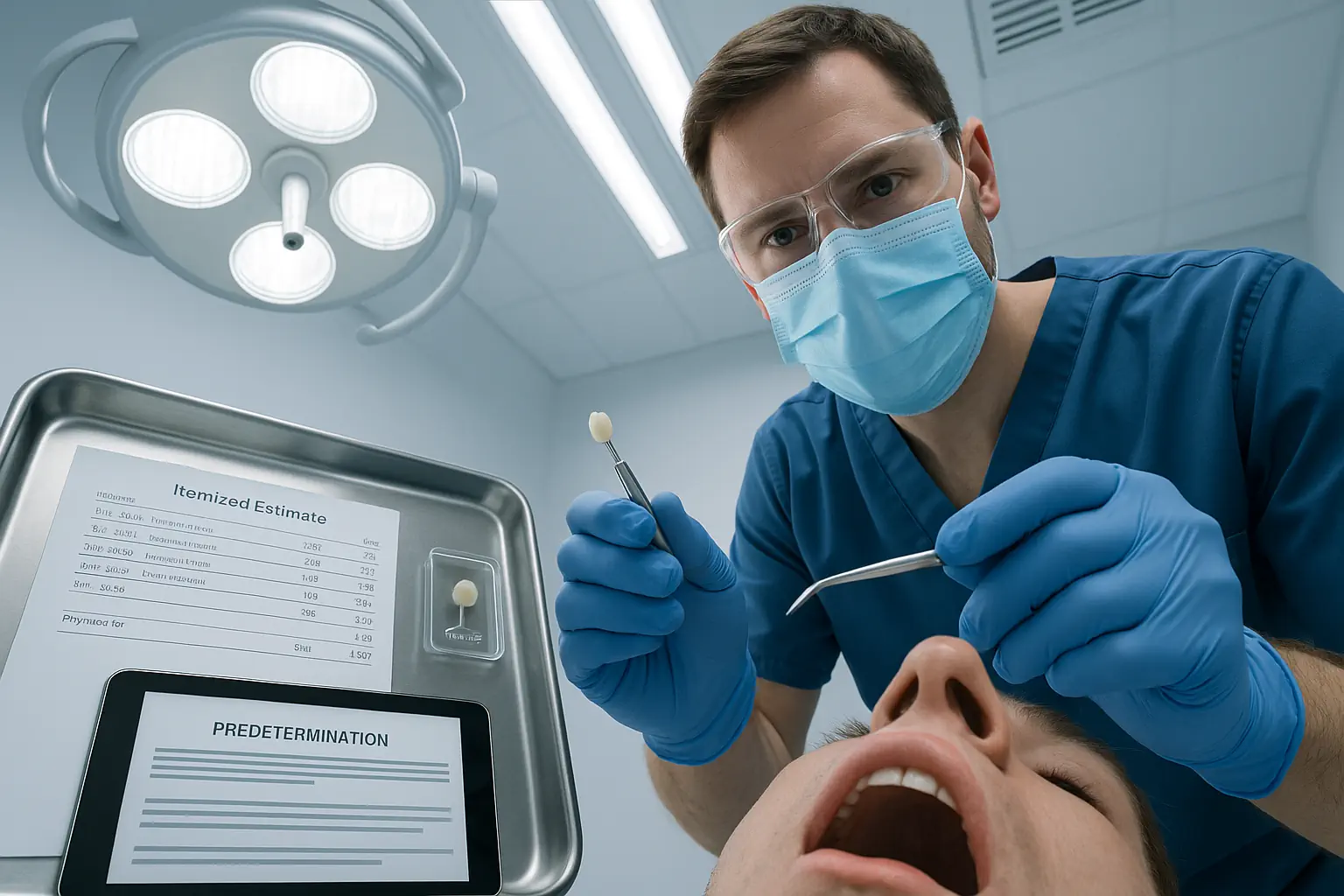
Getting an accurate picture of your out-of-pocket crown cost with insurance is simpler than most people realize—it just requires two pieces of paper. First, ask your insurer for a written predetermination using the ADA procedure codes your dentist plans to bill. Second, ask the clinic for a dated, itemized estimate listing those codes plus any likely add-ons like a buildup, post/core, temporary crown, imaging, and follow-up visits.
Two things worth keeping in mind here: In-network care tends to be more predictable because the allowed fees are already agreed upon—the most common surprise is simply running out of annual maximum mid-treatment. Out-of-network care often costs more than expected because insurers pay their allowed amount, not the dentist's billed fee, and you're responsible for the difference.
Once you have both documents, compare them against the cost ranges in this article and run them through the checklist below. The expensive mistakes happen when people schedule treatment—or book flights—before those documents exist.
If you're comparing multiple clinics (local, out of network, or abroad), standardize your requests: itemized estimates by procedure code, material details, and written aftercare terms. A structured comparison tool helps—for example, the Globalcare app lets you compare vetted clinics and quotes side by side while keeping all your documents organized in one place.
Crown planning gets confusing because insurers speak in benefits and codes while dental offices speak in clinical steps and materials. This simple framework keeps you fluent in both—so you can compare local care, out-of-network options, and international clinics on equal footing.
Think of CROWN as a working tool you pull out every time you request a quote. Ask the right questions, get answers in writing, and keep everything together so you can compare apples to apples—and protect yourself if a claim gets denied down the road.
Use CROWN every time you request a quote—it's especially valuable when you're weighing a lower price abroad against the convenience of local follow-up.
Marketing language like "major services covered at 80%" doesn't tell you what you'll pay for your specific tooth, in your current plan year. A written predetermination tied to actual ADA procedure codes is what turns the fine print into a real dollar figure you can plan around.
When you call your insurer, make sure to nail down these specifics and ask for them in writing: Is the dentist in-network for your specific plan—not just "accepting" your insurance? What's your deductible, and what percentage applies after you've met it? How much of your annual maximum is left this year? If you recently enrolled, is major work covered yet, or are you still in a waiting period? Has a crown on that tooth been paid for within the last five years (or whatever frequency limit applies)? Does your plan apply alternate benefit language that would reimburse as if you chose a less expensive material? Does your plan require or recommend prior approval for crowns? And does the plan cover buildups or posts when they're clinically required?
One more request that can help: ask the insurer for a de-identified sample Explanation of Benefits (EOB) for a typical crown claim under your plan. It shows how they break down the allowed amount, payment, and patient responsibility—so you'll know exactly what to expect.
Numbers speak louder than percentages. Here's how crown bills typically play out:
Example A: In-network with plenty of annual max left. The allowed amount for a zirconia crown (code D2740[1]) is $1,168. You have $50 left on your deductible. Coinsurance for major services[2] is 50%. You pay the $50 deductible plus 50% of the remaining $1,118, which comes to $609. The plan pays $559.
Example B: "80% covered," but you've nearly exhausted your annual max. The allowed amount is $1,200. Coinsurance is 80%[4]. But your remaining annual max is only $300. The plan can only pay $300 because it can't exceed that cap. You're left paying $900—plus any non-covered add-ons.
Example C: Out of network with allowed amount far below the dentist's fee. Your dentist charges $2,200. The plan's allowed amount is $1,200. Coinsurance is 10%–50%[5]. The plan pays 60% of $1,200 = $720[6]. You may owe $2,200 minus $720, leaving you with $1,480 (plus your deductible).
The takeaway here is clear: your actual cost hinges on the allowed amount, your annual maximum, and your network status—not just the coverage percentage printed on the brochure.
A useful estimate is itemized, dated, and includes the procedure codes the office plans to bill, plus a named contact who can answer questions from your insurer. A one-line quote that just says "Crown: $1,500" often hides services that add hundreds of dollars to the final bill.
Ask for an estimate that breaks out these common components separately: exam and X-rays (D0120 periodic evaluation, D0274 bitewings if needed), additional imaging when indicated (panoramic or CBCT), core buildup if needed (D2950), post and core for certain teeth (D2954), temporary crown (often D2799), the crown itself (codes in the D2740–D2794 range depending on material), lab-related costs (which lab, rush fees, remake policy), and follow-up visits (bite adjustments included or billed separately).
Keep in mind that many plans consider cementation included in the crown code. If you see separate cementation charges, ask the office to explain how it will be billed.
And here's one clarifying question worth asking: Is this estimate based on the insurer's allowed amount (common for in-network) or the clinic's standard fees (common for out-of-network)? That single detail often explains why a "50% covered" crown still feels expensive.
A dental crown is part medical device, part precision fit. Price matters, but so do the materials, the forces your bite puts on that tooth, and the lab work behind the scenes.
Ask your dentist to explain in plain terms: Who's placing the crown (general dentist or specialist), and how much experience do they have with similar cases? What's the typical process if a crown needs adjustment or a remake, and how often does that happen? Why this specific material for this particular tooth—considering whether it's front versus back, your bite strength, and any grinding habits? Is it milled in-office or made by an outside dental lab? Which lab, where is it located, and what quality systems does it follow? Can they show before-and-after examples of similar crowns? And if the fit or bite is off, what happens—who pays?
In general, strong all-ceramics (including zirconia) work well for back teeth where forces are higher, while porcelain crowns may be preferred for front teeth due to aesthetics. Gold crowns remain an excellent choice for molars in patients who prioritize durability over appearance. But the best material depends on your individual situation. Your dentist should tie the recommendation to your bite, the tooth's condition, any known allergies (some patients react to certain metals in porcelain-fused-to-metal crowns), and your cosmetic goals—not offer a one-size-fits-all answer.
Crown warranties aren't standardized across dentistry, and they're only meaningful if they're written down. Many clinics offer limited warranties (often one to five years), but what's actually covered varies widely.
Before treatment, ask for written terms that spell out what's included (remake for fit issues, certain types of fractures), what's excluded (grinding damage, new decay, trauma, missed follow-ups), whether lab or retreatment fees apply for remakes, shipping costs if a lab remake is needed, how aftercare works (are bite adjustments included for a certain period?), and what happens if you move or the crown was done abroad.
When you're traveling internationally for dental work, aftercare becomes the make-or-break factor. A bargain crown turns expensive fast if you need adjustments and can't get back to the original clinic. If a warranty requires an in-person return visit, factor that into the true cost.
The sticker price is only part of the decision. Time off work, follow-up access, scheduling hassles, and paperwork all shape the real cost of getting a crown.
Typical timelines: A standard dental crown procedure usually takes two visits over one to three weeks in most U.S. offices—prep and temporary placement first, then the final crown. Same-day crowns can be completed in one longer visit when the tooth is a good candidate. Out-of-network status doesn't usually change the clinical timing, but claim processing can add weeks; appeals stretch that even further. Travel cases typically require a multi-day window (often three to seven days)[7], plus buffer time for adjustments or remakes.
Key risks to plan for: In-network offices can have scheduling delays. Out-of-network claims mean paperwork and potential appeals. Travel cases can create aftercare gaps if you need adjustments after returning home. None of these are deal-breakers—as long as you plan for them.
These figures are starting points for budgeting, not actual quotes. Your final tooth crown cost with insurance depends on which tooth, which material, whether a buildup or post is needed, your network status, and local pricing.
Why do prices swing so much? Geography affects overhead, supply and demand, and lab relationships. Some offices use premium labs or offer more customization, which raises fees. People often ask: How much does a porcelain crown cost with insurance? How much is a gold crown with insurance? The answers vary widely because they depend on your plan's allowed amount, remaining annual maximum, and whether additional work like a buildup is needed. Use this table as an anchor, but rely on dated predeterminations and itemized clinic estimates for any real decisions.
Last updated: 02/2026. Sources: DentalPlans.com price summaries, ADA survey-based cost references, and publicly available network fee information.
Most cost surprises can be traced back to two predictable culprits.
First, the annual maximum gets eaten up quickly. Even one crown—especially when you add related work—can consume a large chunk of a $1,000–$2,000 yearly cap. If you've already used benefits on cleanings, fillings, or other procedures, your remaining maximum may be smaller than you think.
Second, insurers may demand documentation proving that the crown is medically necessary and the tooth is restorable. If the X-rays, photos, and chart notes don't clearly support the need, coverage can be reduced or denied entirely.
A few other realities to expect: The coverage percentage applies to the allowed fee, not the amount your dentist bills. Coinsurance varies by procedure code—a buildup might be covered differently than the crown itself. Predeterminations reduce uncertainty by translating codes into actual payment estimates. And cosmetic exclusions can come into play—if the primary purpose is cosmetic, coverage may drop even when a crown is clinically reasonable.
Extra charges aren't automatically a red flag—many are clinically appropriate. The problem is when you don't find out about them until the bill arrives. Before agreeing to treatment, ask whether the estimate includes (or might eventually include) initial exam and consultation fees (including specialist referrals), X-rays and imaging by type (bitewings versus panoramic versus CBCT), core buildup (often several hundred dollars for heavily damaged teeth), post and core, temporary crown creation and removal, lab fees and customization (shade matching, rush fees, remakes), additional anesthesia or sedation, bite adjustments at follow-up, emergency or unscheduled visits, and potential root canal treatment if deeper problems surface during crown preparation.
By now, you're probably weighing one main constraint: cost, timing, or access. Here's how people typically make their choice—and the first administrative step that protects you in each scenario.
Ask yourself: "Do I want the simplest billing and easiest local follow-up, even if it's not the absolute lowest price?"
When predictable billing and easy follow-up matter most, in-network is usually the best fit. The trade-off: popular in-network offices can have scheduling constraints, and your annual maximum can cap your savings quickly. Typical timeline: two visits over one to three weeks[8] (or one longer visit for same-day crowns when appropriate), plus a short follow-up if your bite needs adjustment.
Immediate step: Confirm the dentist is in-network for your exact plan and request a written predetermination before committing—especially if you're close to your annual max or still within a waiting period.
Ask yourself: "Am I willing to manage paperwork (and maybe an appeal) to see a dentist I specifically want?"
When you have a dentist you trust or want a specific treatment approach, paying more may be worth it. The trade-off: you'll often pay more upfront, and reimbursement may be slower or smaller than expected. Typical timeline: similar clinical timing to in-network, but claim processing can take weeks; appeals extend that further.
Immediate step: Get a dated, itemized invoice with ADA codes and ask your insurer exactly which documents they require for reimbursement (claim form, proof of payment, provider info, X-rays, or clinical notes).
Ask yourself: "Do the savings still make sense after I factor in flights, time off, and the risk of needing follow-up when I'm back home?"
When price is your main driver, dental tourism can substantially cut the clinic fee. It also increases your planning burden: you need itemized pricing, clear material details, and a realistic aftercare plan at home. This path fits people with flexible schedules and the ability to research carefully. Typical timeline: plan for a multi-day treatment window, plus buffer time for adjustments or remakes.
Immediate step: Insist on a dated, itemized USD quote, written warranty terms, and a specific plan for aftercare—including what happens if you need an adjustment after returning to the U.S. Confirm how you'll obtain copies of your dental records (X-rays, treatment notes) to share with a dentist at home if needed.
For many U.S. patients, Mexico becomes the first serious alternative because travel is straightforward and savings on dental crowns can be substantial. The condition: you must verify quality, understand the full treatment plan, and communicate clearly. That's the gap Globalcare addresses. It connects you to a curated network of verified dental clinics across Mexico—prioritizing modern equipment, English-speaking staff, transparent treatment plans, and clear aftercare—so you're not evaluating a major medical purchase based on a handful of ads.
You don't always need a cheaper crown to lower what you pay. More often, you need a smarter plan.
Plan around the benefit year. If it's clinically safe and your dentist agrees, splitting major work across two plan years can let you tap into two annual maximums. Ask for the cash price. Some offices offer discounts when you pay at the time of service. Choose materials strategically. The best material depends on tooth position, bite forces, and individual factors—have an honest conversation with your dentist about your options. Use HSA or FSA funds when eligible. Paying with pre-tax dollars lowers your effective cost. Ask about bundled pricing. If you need multiple crowns or additional major work, some clinics will package services at a better rate. Negotiate what's actually negotiable. You can't change what your insurer allows, but you can ask about cash discounts, bundling, and whether lab customization fees can be reduced without compromising outcomes.
Be cautious with financing. Dental credit can help bridge the gap, but understand the interest rate, promotional period, and what happens if you miss the payoff window. If you need financing, consider lower-interest options like a credit union personal loan.
Whether you contact your insurer or dental office by phone or email, the goal is the same: get dated answers tied to procedure codes and save them. If you call, ask for a reference number and follow up with a short email recap.
"Can you issue a written predetermination for my crown using the ADA procedure codes my dentist will submit? Please include what the plan would pay after my deductible and what counts toward my annual maximum. Also confirm my waiting period status and any frequency limits for crowns. If my plan applies alternate benefit rules by material, tell me how that affects this crown code. Can you provide a de-identified sample EOB for a typical crown claim under my plan? May I have your name, today's date, and a reference number?"
"Could you provide a dated, itemized estimate for my crown that includes ADA procedure codes and separates any likely add-ons like a buildup, post/core, imaging, and temporary crown? Please include the crown material type, lab details, and your written warranty and aftercare terms—including whether follow-up bite adjustments are included. Who should I contact if my insurer requests documentation?"
Whether you stay local or go abroad, solid documentation reduces claim delays and makes appeals far easier. Create a simple digital folder (Google Drive, Dropbox, or whatever you use) and organize it this way:
Under "Insurance": Save your plan summary, predetermination, Explanations of Benefits, claim forms, and appeal letters. Under "Clinic": Save itemized estimates (with an "updated on" date), procedure notes, final invoices, and proof of payment. Under "Warranty": Save written warranty terms and lab documents. If you're traveling: Add flights, lodging, appointment confirmations, travel insurance details, and copies of your dental records (X-rays, treatment notes) for sharing with a dentist at home.
Add a simple spreadsheet to track contact names, phone numbers, emails, appointment dates, amounts quoted versus paid, and reference numbers. Simple rule: if it matters, save it with a date in the filename (example: 2026-02-10_Predetermination_D2740.pdf). That alone makes appeals and warranty claims faster.
Dental tourism can be a genuine cost-saver—but only when the clinic is transparent and your follow-up plan is realistic. The goal isn't to eliminate all risk (no one can guarantee outcomes). The goal is to reduce avoidable risk through better verification.
Before booking anything, ask about sterilization and infection control protocols, clinic accreditations and what they actually cover, materials and manufacturers used for your specific case, which lab is used and how remakes are handled, warranty terms (must you return for remakes? are there shipping fees?), what happens if the bite is off or a temporary fails in the days after treatment, how you'll obtain copies of your records (X-rays, treatment notes) before leaving, and the clinic's experience with cases like yours.
If you grind your teeth, have significant bite issues, or realistically can't return for adjustments, be especially cautious about traveling for crown work.
Open to Mexico but want the research burden to feel manageable? Consider a service that verifies clinics and makes pricing and credentials easier to compare. Globalcare offers access to verified clinics with bilingual staff and transparent treatment plans, plus personal support for planning and travel logistics to destinations like Cancún, Los Cabos, Los Algodones, Puerto Vallarta, Playa del Carmen, Guadalajara, Mexico City, Querétaro, Monterrey, Ciudad Juárez, and Mérida. Each destination has trade-offs depending on your budget, timeline, and comfort with follow-up. You can browse options in the Globalcare app before contacting any clinic.
The prices below are commonly advertised ranges for a single crown at private clinics. They may or may not include exams, X-rays, temporaries, buildups, or posts—so always insist on itemized quotes. Quality and standards vary widely, even within the same city.
Source for Costa Rica pricing: Costa Rica Dental Team[9]
At this point, you don't need more theory. You need numbers you can rely on. Request a written predetermination from your insurer. Get a dated, itemized estimate from one or more clinics. Compare warranty and aftercare terms side by side—not just the crown price. Store everything in your document folder so claims and follow-ups go smoothly.
If travel is on the table, add one more step before committing: confirm your treatment window, buffer days for adjustments, and what you'll do if you need a bite correction after you're home.
Using Globalcare? Insist on itemized, USD-based, date-stamped estimates that spell out what's included: exams, X-rays, temporary crown, buildup or post if needed, crown material, lab details, and warranty terms. Use the platform to keep all documents and messages in one place—especially useful if you'll be submitting out-of-network claims or comparing multiple destinations.
Globalcare is built for people who know what they need, find insurance coverage lacking, and want to explore options without gambling on quality. Inside the Globalcare app, you can compare pre-screened clinics, see transparent pricing and verified reviews, and request multiple free quotes without any upfront commitment.
To keep quotes comparable, align each request by tooth and material (example: "upper right first molar, zirconia crown") and prioritize clinics that can clearly explain their lab workflow. The platform lets you store estimates, X-rays, warranty terms, and messages together, then compare clinics side by side without losing details in email threads.
Choosing the right Mexico destination: Optimizing for the shortest, simplest trip? Look for clinics in high-connectivity destinations (Cancún, Los Cabos, Puerto Vallarta, Mexico City) with bilingual staff and clear aftercare instructions. Maximizing savings on larger cases? Consider destinations known for dental-focused travel (like Los Algodones) and prioritize fully itemized plans and written remake policies. Want a city clinic experience with broader specialist access? Larger metros like Guadalajara, Monterrey, Querétaro, or Mexico City may be a better fit.
Get in touch to get started!
Our team of experts will ensure your all-on-4 dental implants journey is safe and easy. We're dedicated to guiding you to your new smile every step of the way!
ConnectConcierge Services

Trusted Dentists

Safe Locations

Concierge Services
Trusted Dentists
Safe Locations

Disclaimer: Dental Cost Estimation Calculator
This Dental Cost Estimation Calculator is designed to provide users with estimates of potential savings when seeking dental treatments abroad compared to the cost of similar procedures in the United States. However, please be aware of the following important information before using this tool:
1. Estimations Based on Publicly Available Data:
The estimates provided in this calculator are derived from publicly available data sources, including average procedure costs, exchange rates, and other relevant information. These figures may not reflect the exact costs of your specific treatment or location. Estimations include non-dynamic assumptions for travel and lodging costs that may not reflect the actual costs at the time of your research.
2. Quantitative Model Assumptions:
The calculations are based on assumptions and data inputs that may not account for all factors influencing dental treatment costs. Variations in individual treatment needs, dentist fees, and other variables can significantly affect the final expenses.
3. No Substitute for Professional Advice:
This tool is not a substitute for professional dental advice. Before making any decisions about your dental treatment, it is crucial to consult with a qualified dental professional who can provide you with a personalized assessment of your needs and potential costs.
4. Currency Exchange Rates:
Estimates involving foreign treatment costs rely on currency exchange rates, which can fluctuate. The rates used in this calculator may not accurately represent the current market rates at the time of your treatment.
5. Geographic and Facility Variations:
Dental costs can vary significantly based on geographic location, dental facility, and the complexity of the procedure. The estimates provided are general in nature and may not reflect the specific conditions in your chosen destination or dental clinic.
6. Non-Inclusive Costs:
This calculator may not account for additional expenses such as per diem costs in destination or unforeseen complications during or after the procedure. These costs can substantially impact your overall expenses.
7. Liability Waiver:
By using this calculator, you acknowledge that the estimates provided are for informational purposes only, and Globalcare Network Inc or any of its representatives bear no responsibility for the accuracy of the estimates or any decisions made based on them.
8. Independent Research Recommended:
It is strongly recommended that you conduct independent research, obtain quotes from dental professionals, and consider all relevant factors when making decisions about dental treatment abroad.
In summary, while this Dental Cost Estimation Calculator aims to provide helpful information, it should not be the sole basis for your decision-making process. Your individual circumstances and dental needs may differ, and it is essential to seek professional advice and conduct thorough research before pursuing dental treatment abroad

